All of Lebanon in Teta's house, in its golden age. A festive Lebanese house for Emaar at Marassi Al Bahrain, and its morning café.
1 · The story
A wish, written in 1968
Beirut, 1962. Umnia Nasr is nineteen. She has just come down from the mountain with her mother's recipe book and a voice the whole village stopped to hear. Beirut is the most glamorous city in the world. When the singers finish at the Casino at two in the morning, they come to her table hungry, because word has spread: at Umnia's, the kibbeh is the best in the city, and nobody leaves before sunrise.
Her table fills: a poet from the North, a family from Zahle with their own arak, a judge from the Mountain, fishermen from the South, students from Beirut. Nobody asks where anyone is from. They eat, and they sing.
1968. One night, after everyone has gone, she writes a few words on the back of a menu card and slips it inside her recipe book. She finds the house. She signs.
أمنيتي بيت بيجتمع فيه كل لبنان على طاولتي، ونغنّي ونضلّ نغنّي للصبح
"My wish: a house where all of Lebanon gathers around my table, and we sing, and keep on singing until morning."
1975. The war closes the doors before they ever open. Umnia keeps cooking, in the shelter, for neighbours from every village. The wish shrinks to one table, and it never dies.
Fifty years later, her granddaughter opens the old recipe book and the card falls out, the ink faded, the words still clear.
UMNIA is that house. The wish, granted.أمنية… تحقّقت
2 · The idea
All of Lebanon in Teta's house
Every region at her table
Zahle, the North, Kesrouan and the Metn, Beirut, the South, the Mountain and the Bekaa: each region brings what it does best, cooked the way Teta made it, better than the chefs.
Every craft in her house
Jezzine knives, Tripoli copper, Sarafand glass, Zouk silk, Rashaya clay, Beirut's cement tiles and inlay: the house is built and set by Lebanon's own hands, at palace level, in its golden age.
One song until morning
Lebanon's great voices on her stage, from Fairuz to the tarab of the golden age, and the whole country around one table, singing together until the sun comes up. Her wish, granted.
3 · The house, room by room
Walking into her wish
Every room of Teta's house is one place of Lebanon in its golden age, and each of the six regions of her table has its room: a guest walks through all of Lebanon in one evening.
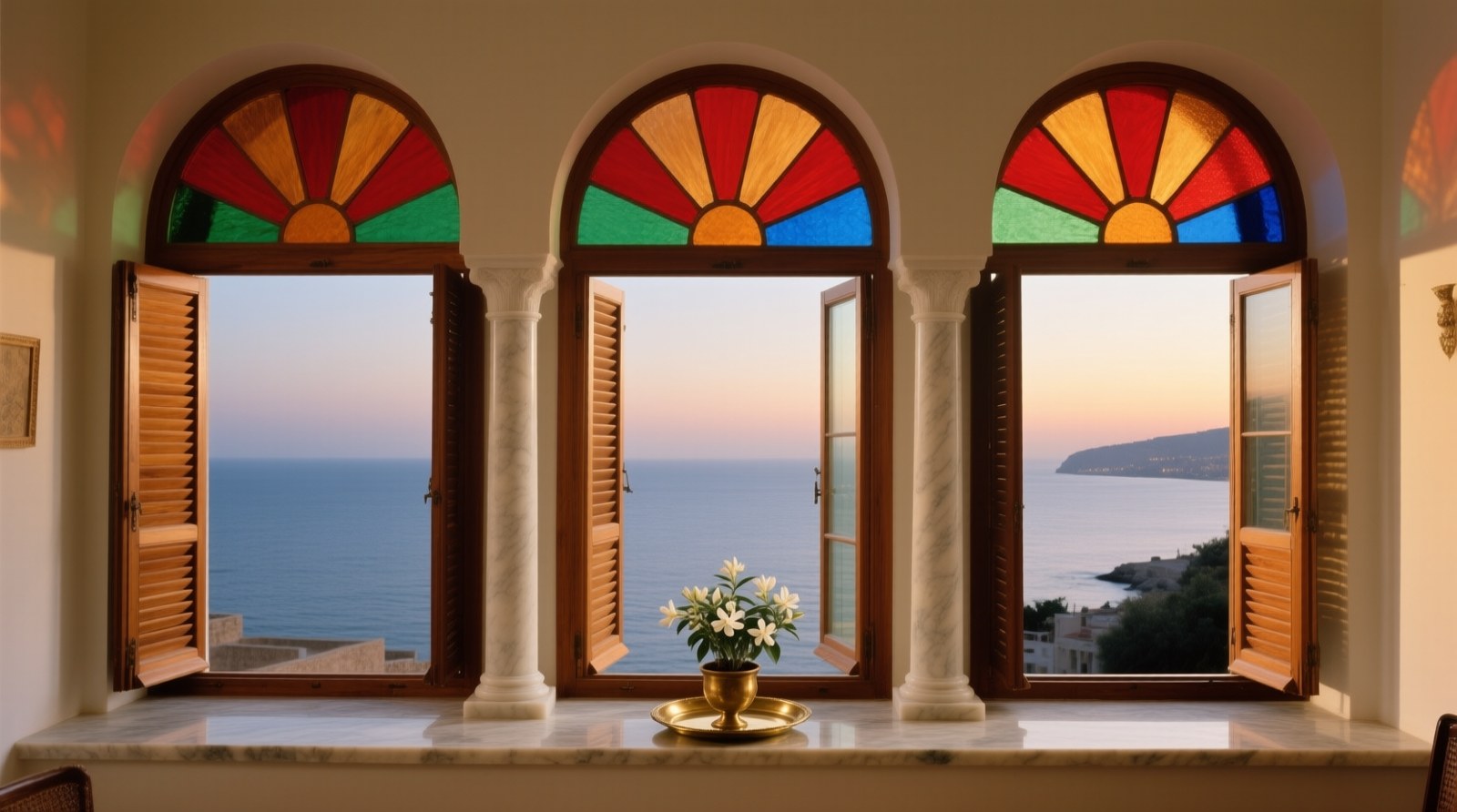
AI mood reference · illustrative · the Lebanese triple arch, the window of every room
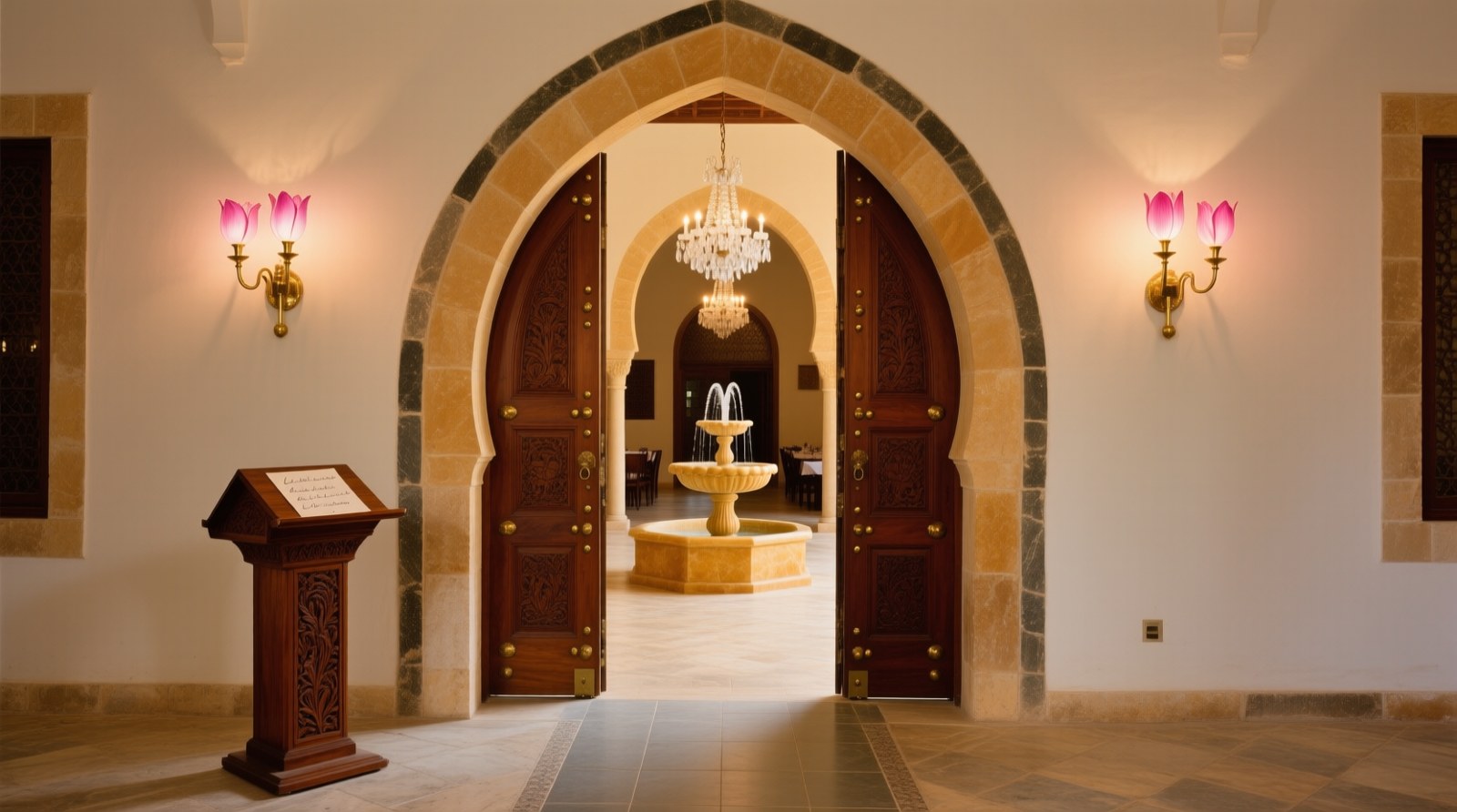
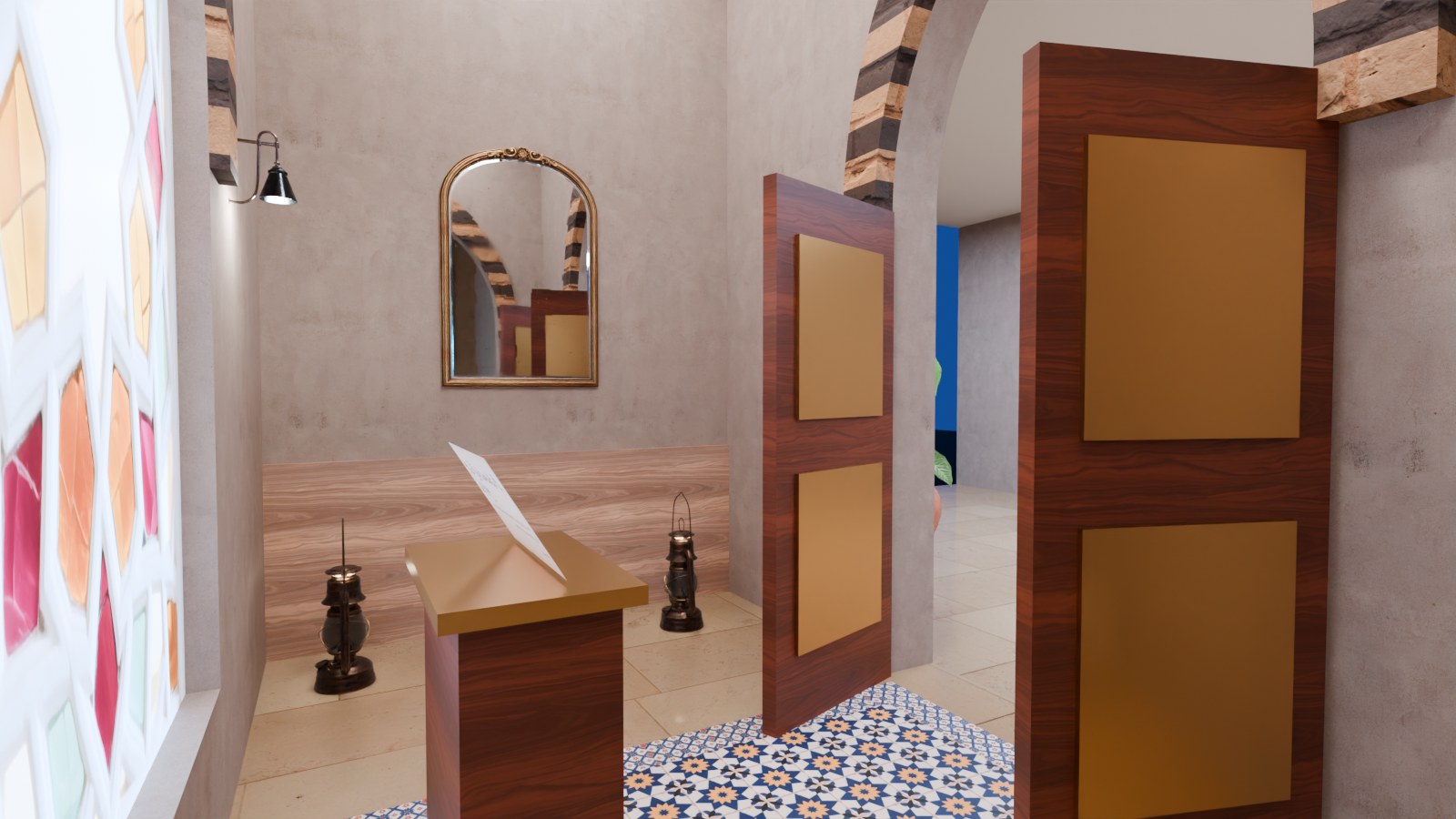
AI mood reference · illustrative · the arrival
el Jabal · the Chouf
Bab Beiteddine · the arrival
Guests come up from Marassi Galleria to the gate of a mountain palace, in the spirit of Emir Bashir's Beiteddine: a pointed arch in carved honey limestone with a thin dark course, tall cedar doors studded with brass, a cement-tile runner, brass sconces with tulip glass. Before the doors, under a single light, Umnia's card on a carved cedar lectern. Teta opens her house the way the Chouf opened its palace.
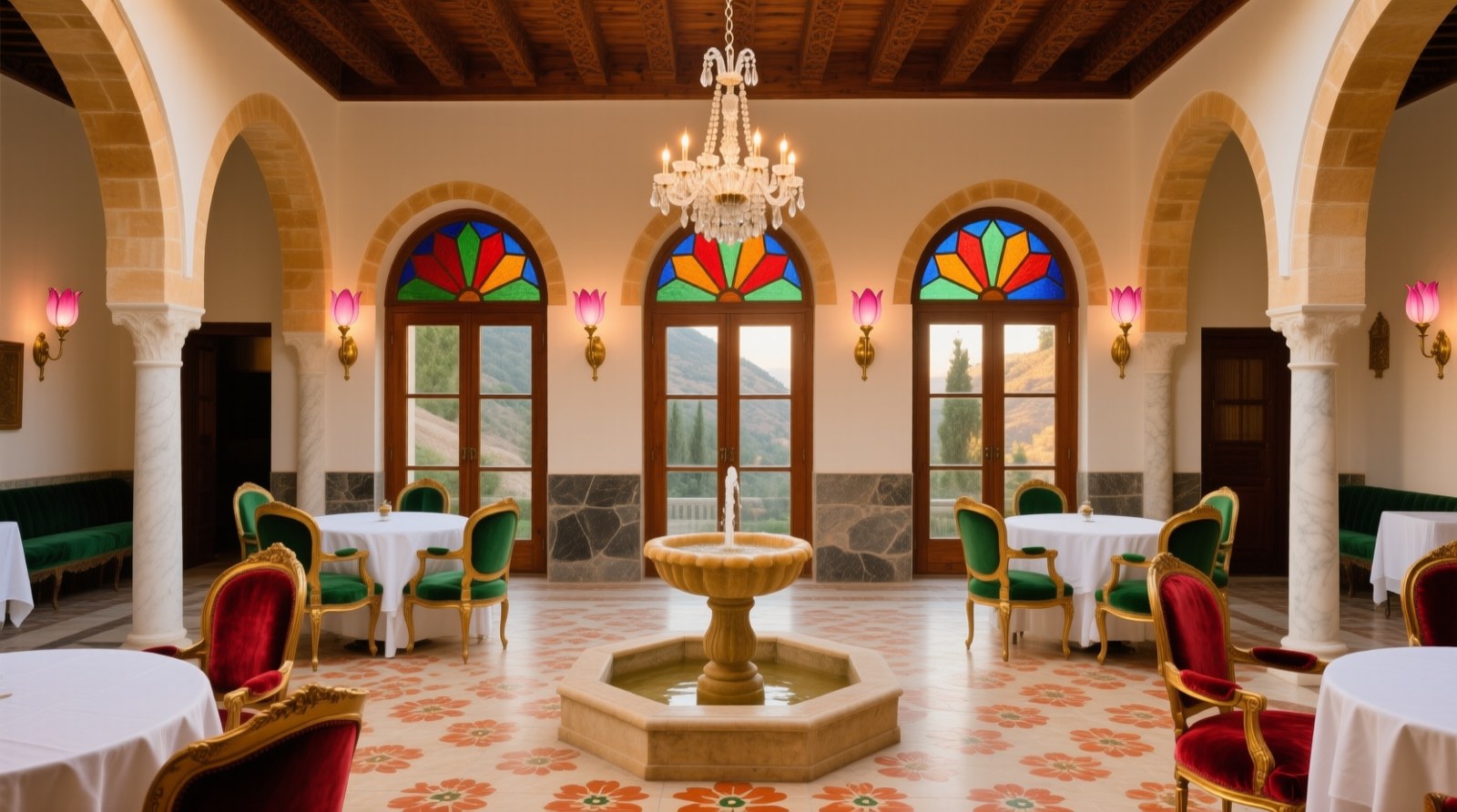
AI mood reference · illustrative · the Dar
el Shmal w Trablus · the North and Tripoli
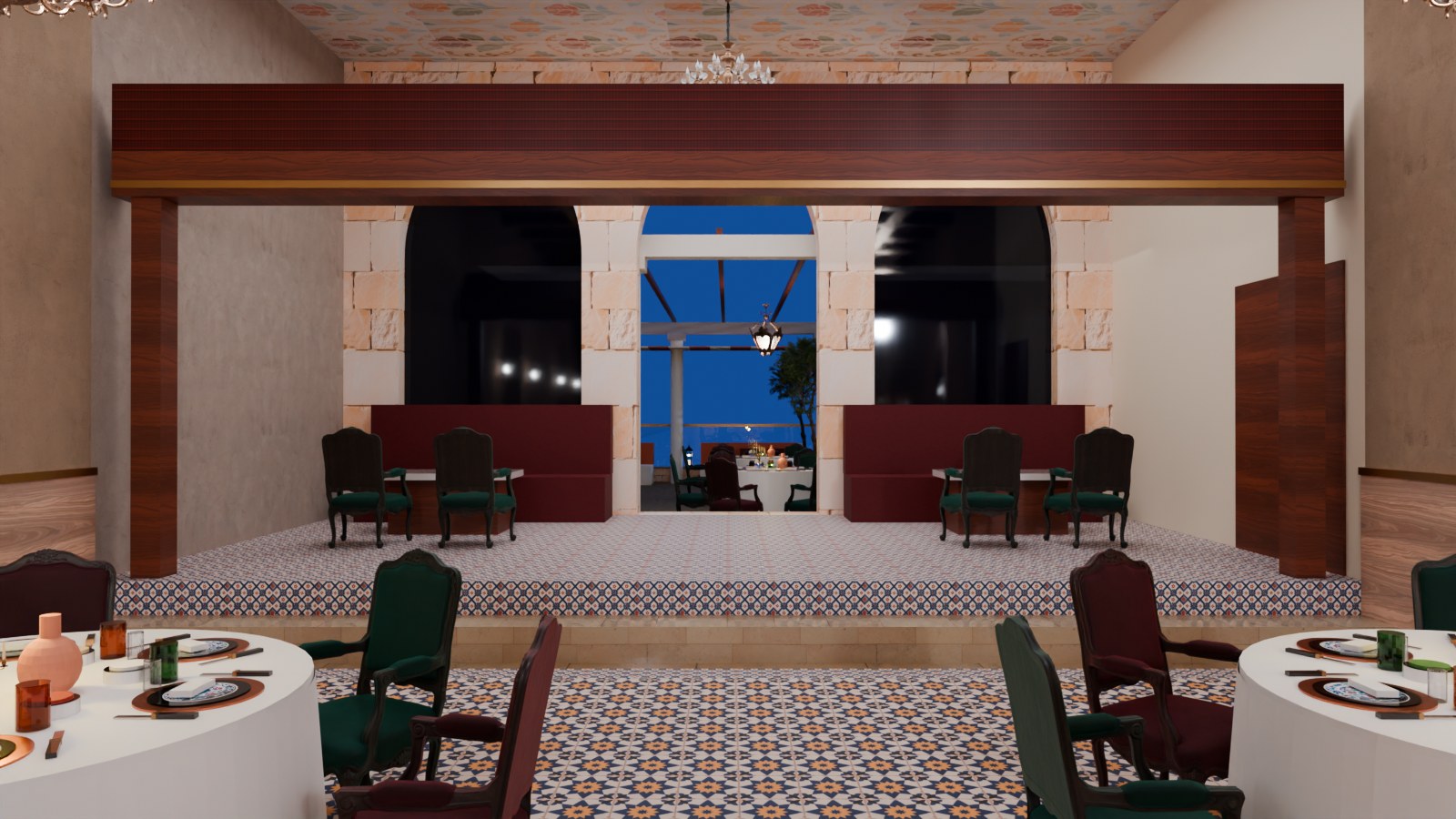
Khan Trablus · the Dar
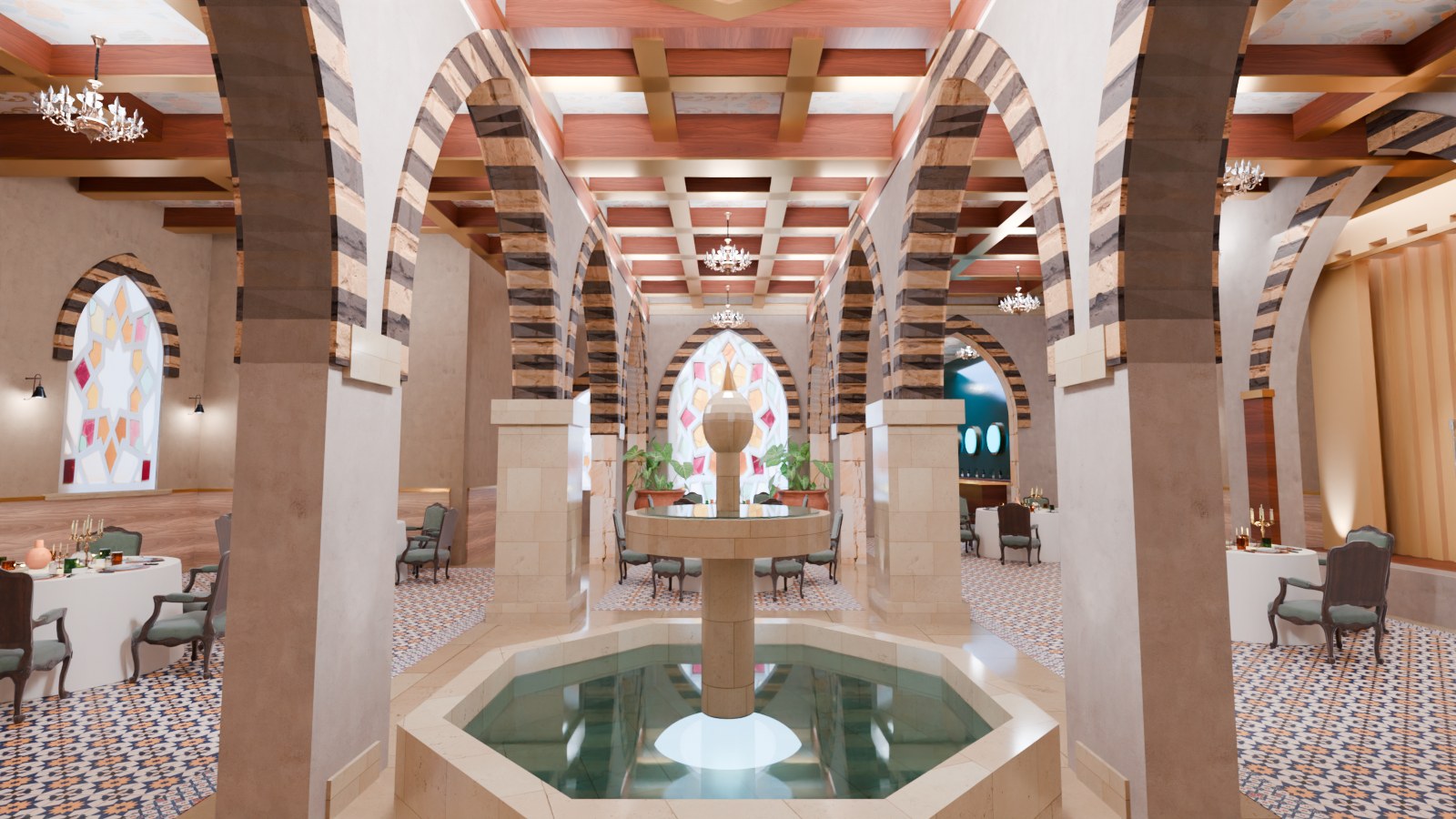
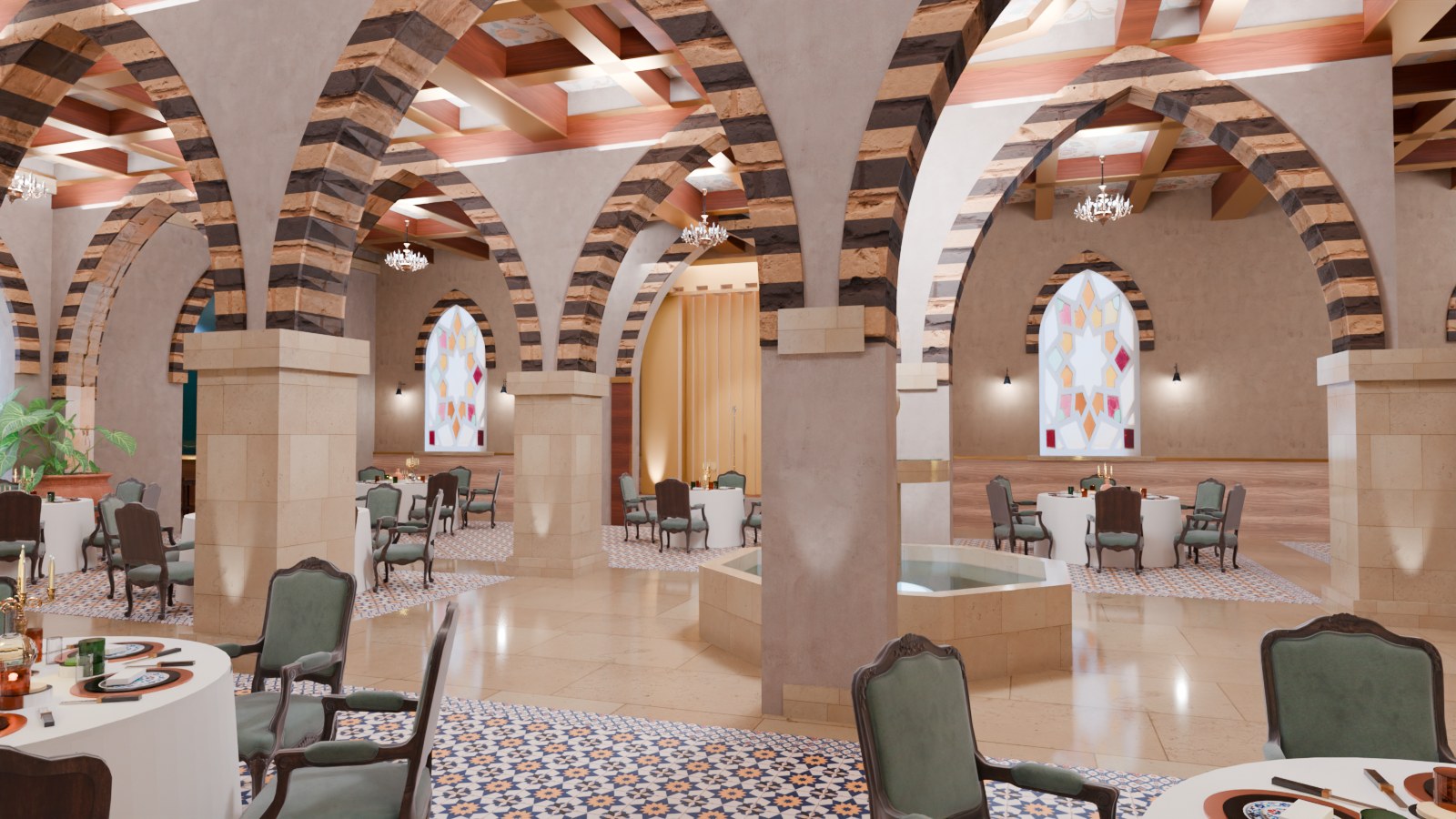
The great hall is the arcaded courtyard of Tripoli's old khans, where the whole North met, traded and ate. Pointed arches in honey stone with the thin dark courses of Tripoli's stonework, on the building's own columns; at the heart an octagonal stone fountain; Lebanese cement tiles laid as carpets; round tables with gilt armchairs in emerald and oxblood velvet; a crystal chandelier hung low over every table; the Lebanese triple-arched windows with their fans of coloured glass.
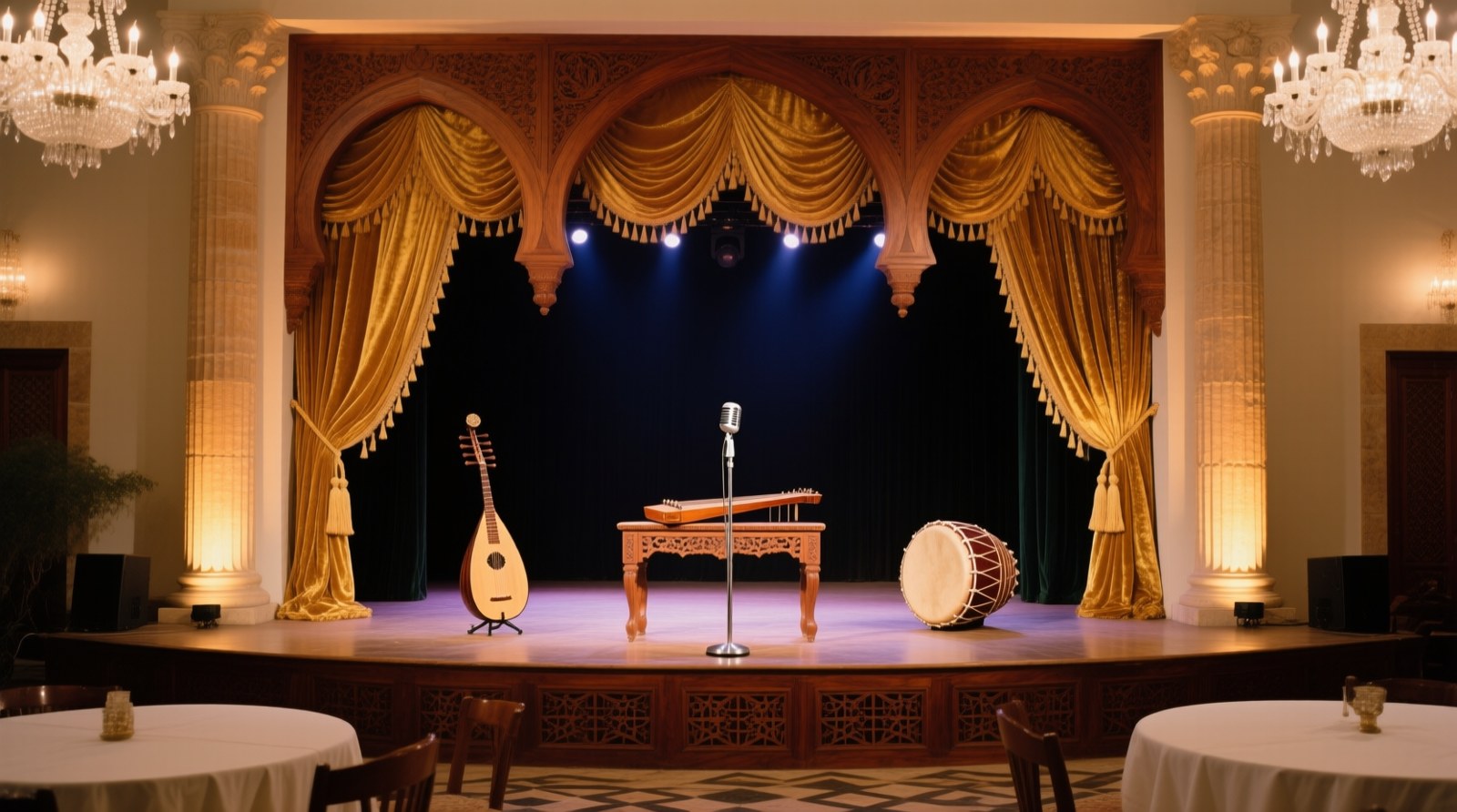
AI mood reference · illustrative · the stage
Zahle w el Bekaa · Baalbek
Layali Baalbeck · the stage
A stage for one great voice, in memory of the Baalbeck Festival nights of the 1960s, when the Rahbanis and Fairuz sang under the temple columns. Baalbek's fluted columns lit from below, a Lebanese triple arch carved in cedar on marble columns, gold velvet curtains swagged open, and the takht: oud, qanun, derbakeh and mijwiz, with a 1960s chrome microphone. "We sing, and keep on singing until morning."
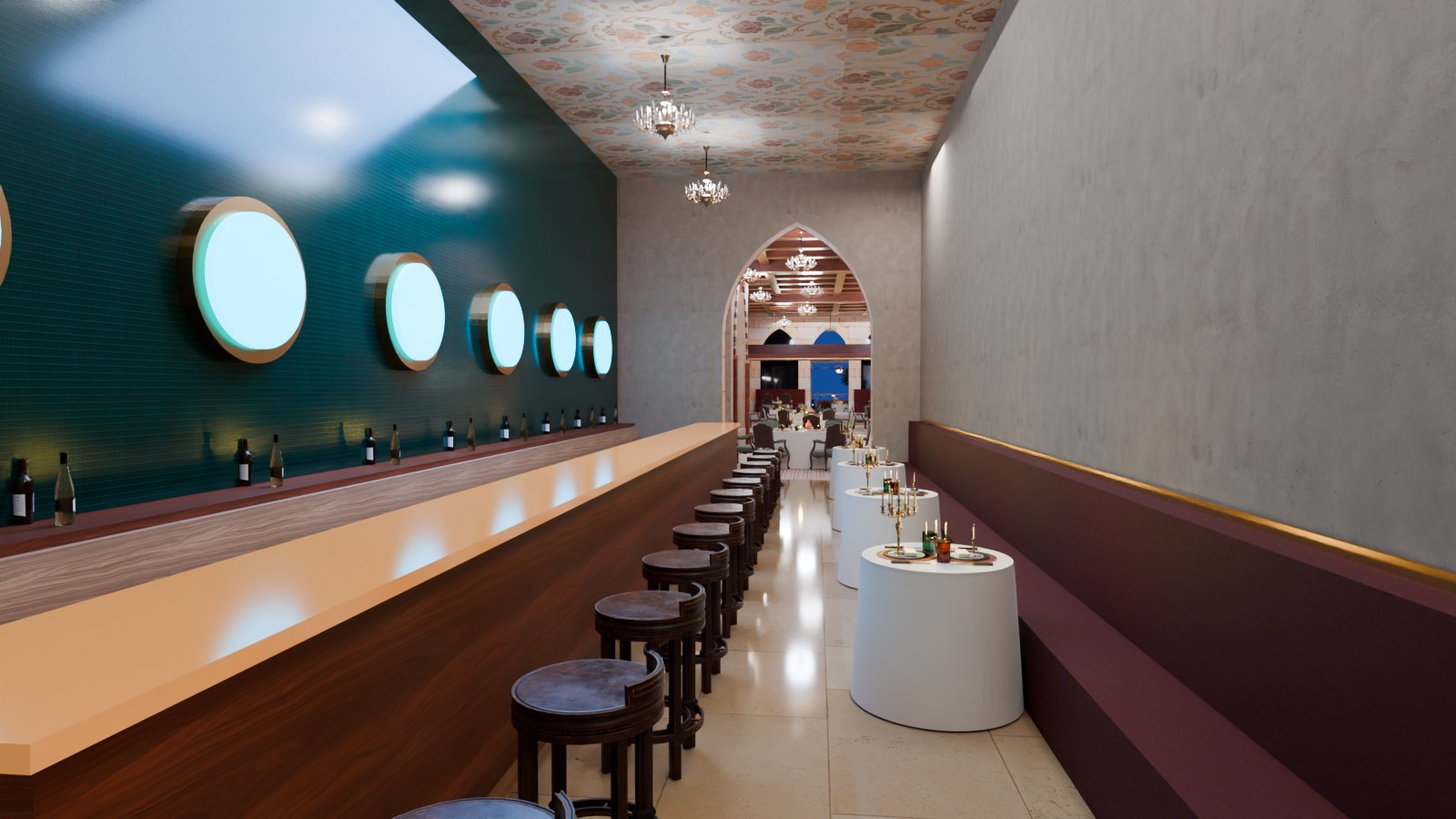
AI mood reference · illustrative · the bar
Kesrwan w el Metn · the Casino du Liban
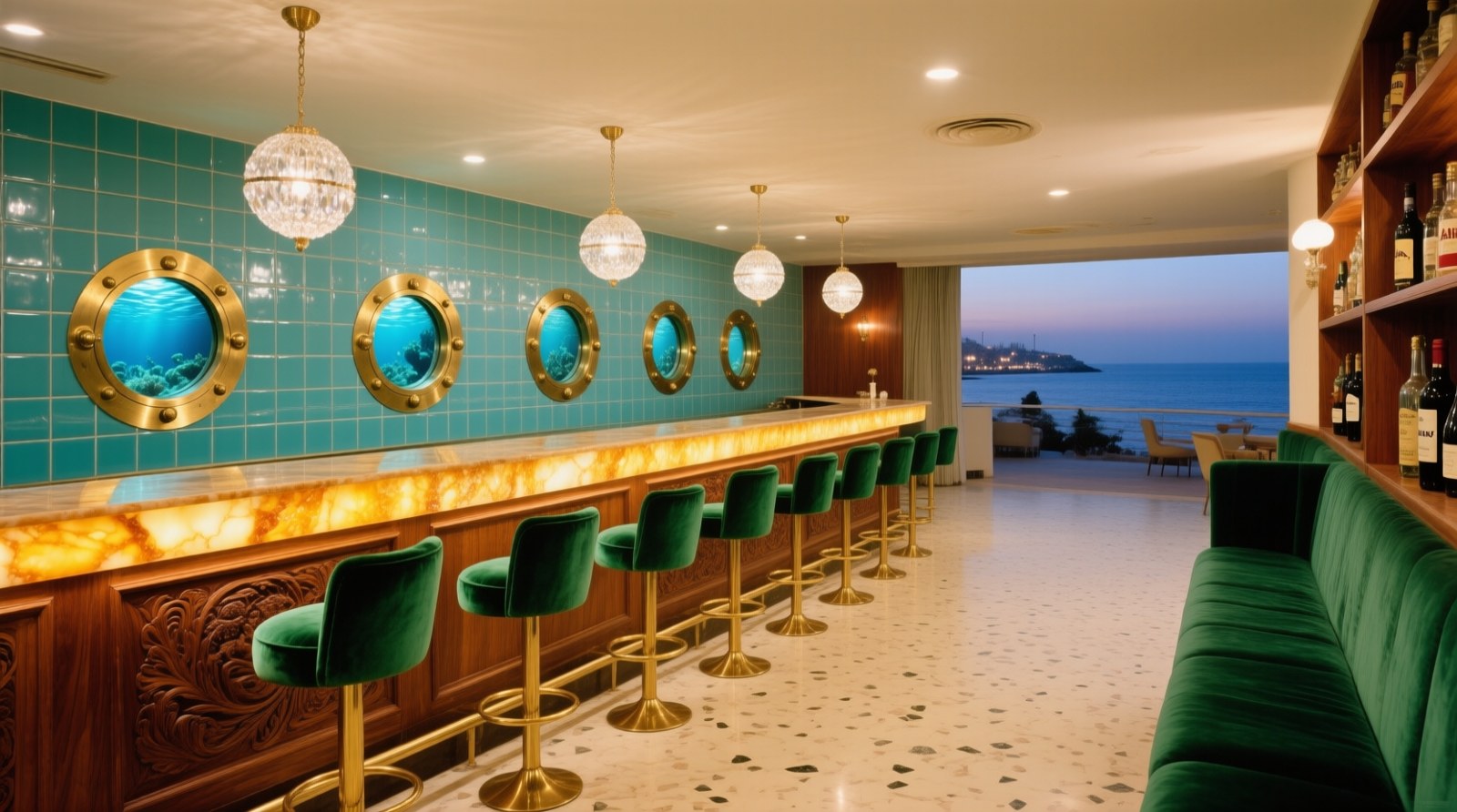
Sous la Mer · the bar
The glamour above Jounieh bay in 1968, the bar where Beirut came after the show: walls of small turquoise square tiles, brass portholes into glowing water, a long onyx top lit from within on a carved cedar front, emerald velvet stools on brass, crystal globes, a cream terrazzo floor.
AI mood reference · illustrative · Teta's salon
Beirut · Achrafieh
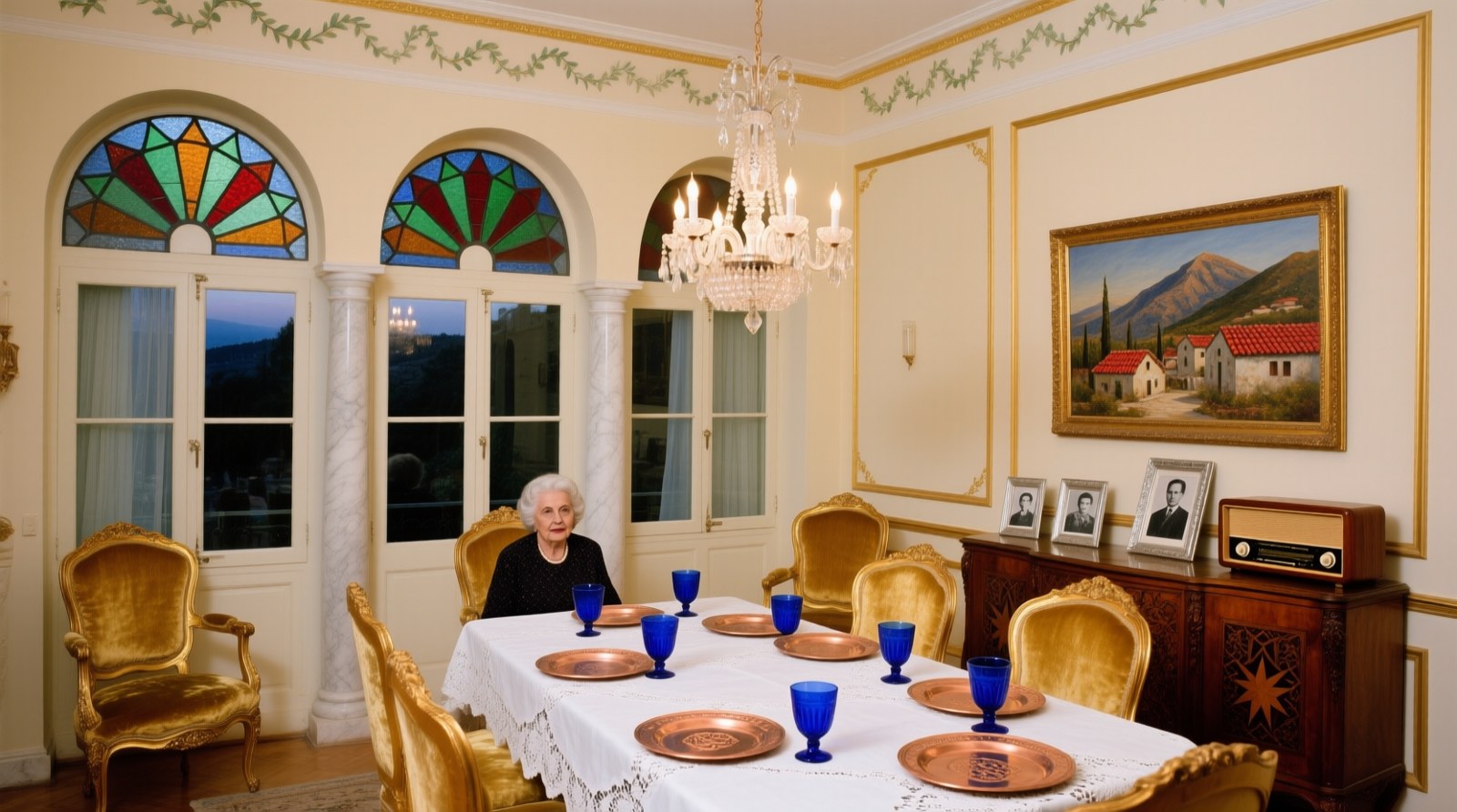
Salon Sursock · Teta's salon
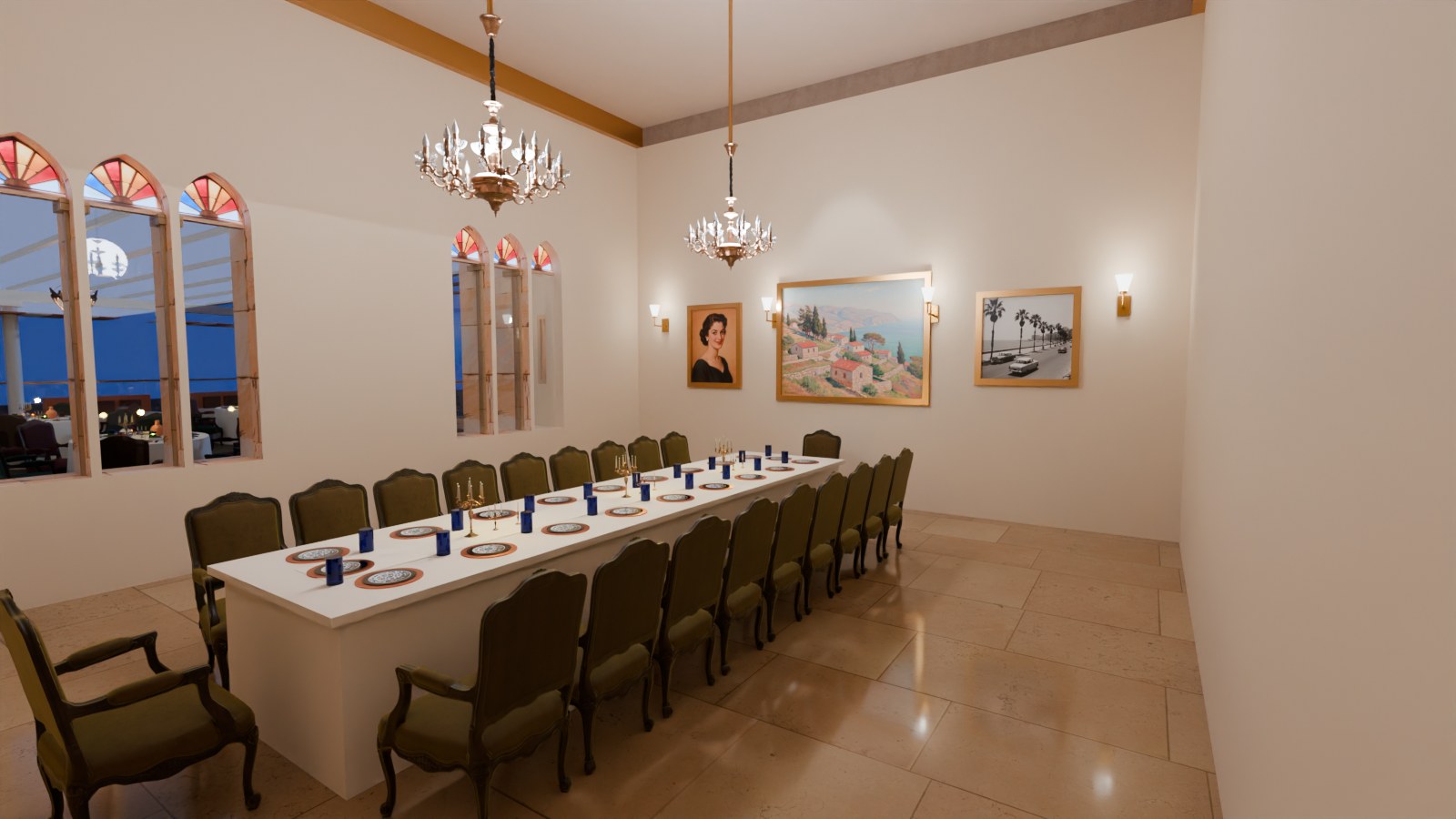
Teta's own room, the salon of an Achrafieh grand house: the triple-arched window on slender marble columns with its fans of coloured glass, a ceiling painted with garlands, cream walls with gilded mouldings, gilt armchairs in gold velvet around one long table dressed in lace, cobalt Sarafand glass and engraved Tripoli copper, family photographs in silver frames, a 1960s radio, an oil painting of a mountain village, her own portrait at nineteen, and the inlaid cabinet that holds her recipe book.
AI mood reference · illustrative · the family alcove
el Jnoub · the South
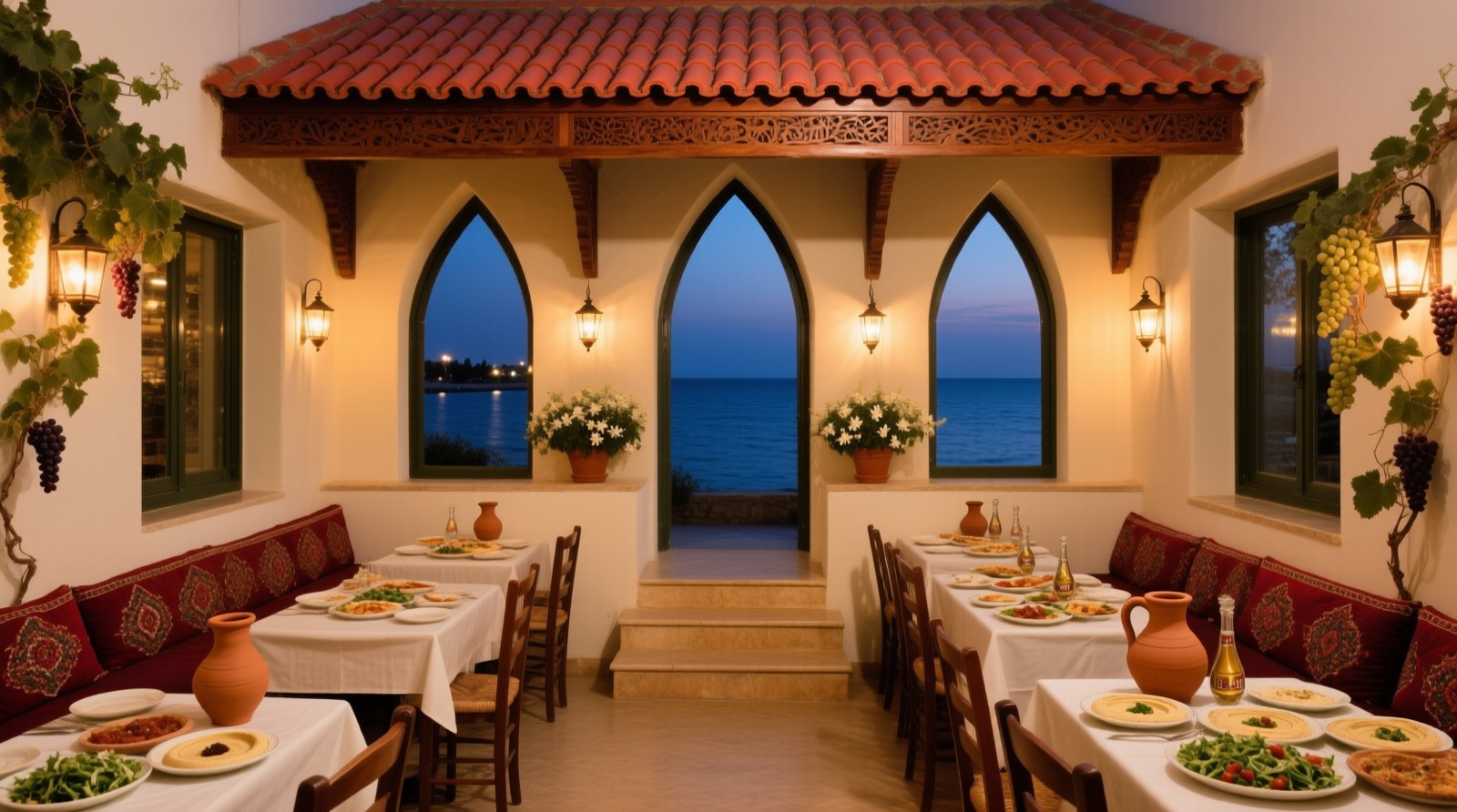
Saida w Sour · the family alcove
The South's Sunday lunch by the sea. Two steps up under a cedar canopy and a hood of red clay tiles, long banquettes with their backs to the sea, the big family table: fish and mezze, carafes of arak, the clay abriq passed from hand to hand.
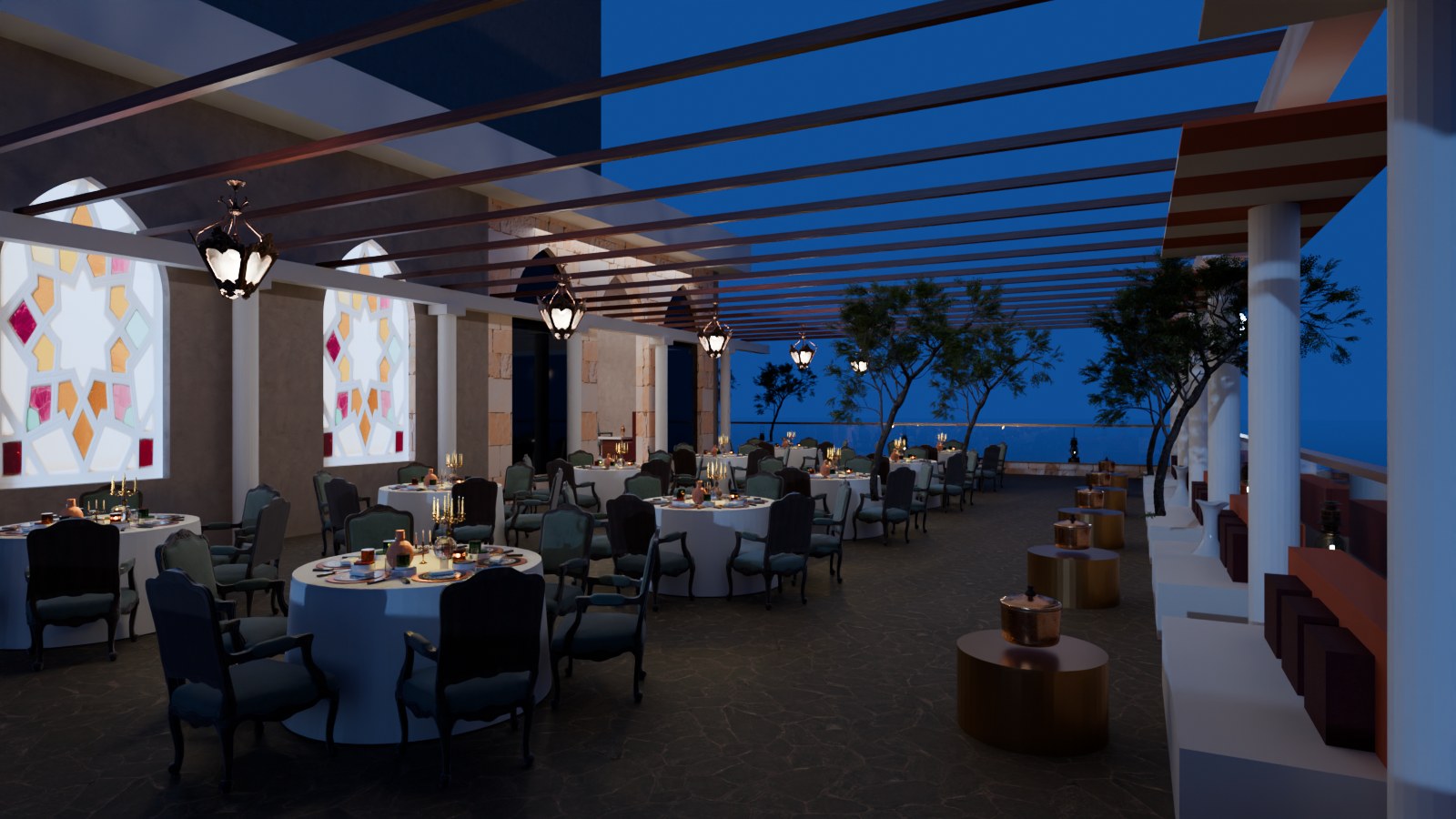
AI mood reference · illustrative · the terrace
Beirut · the bay
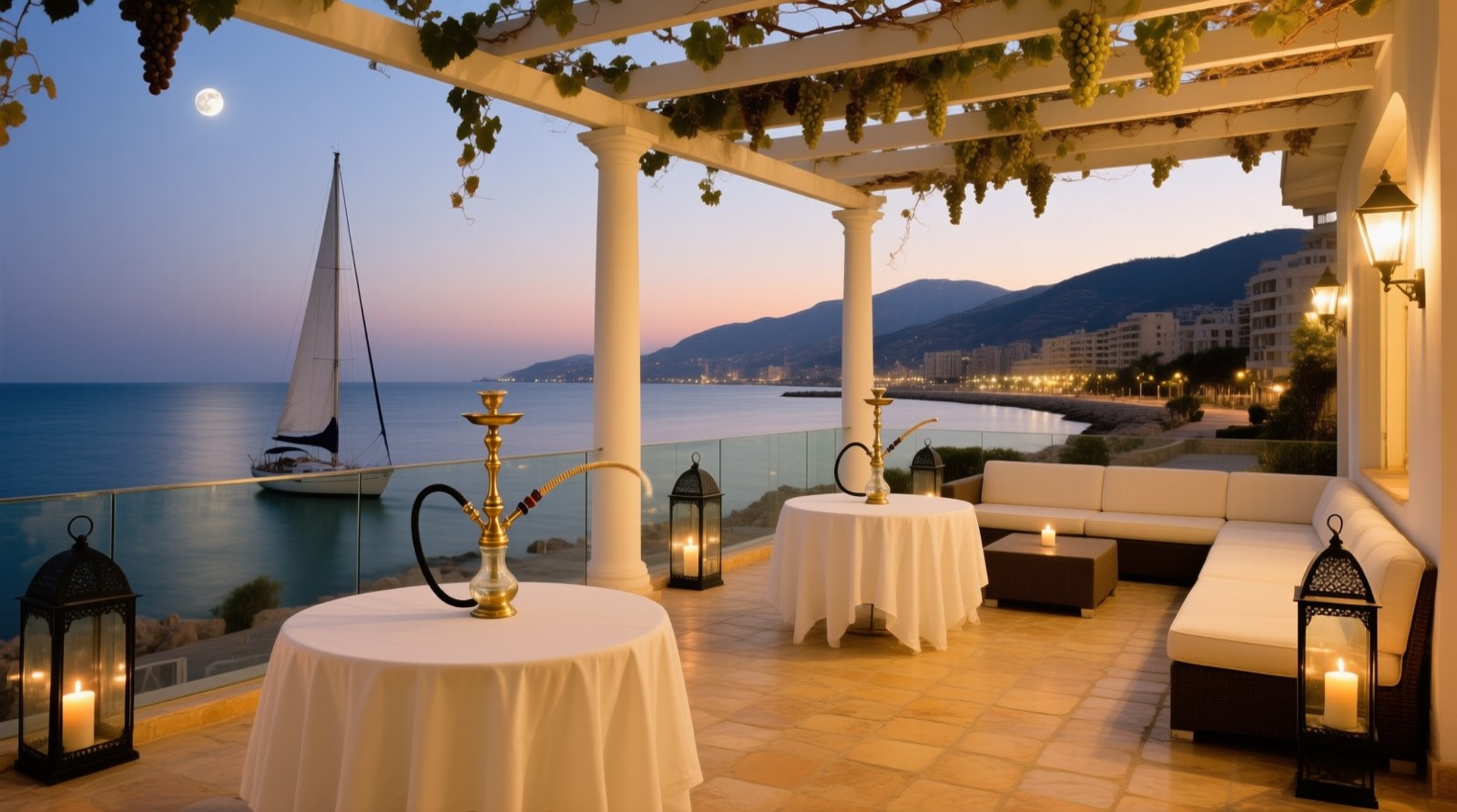
Terrasse Saint-Georges · the terrace
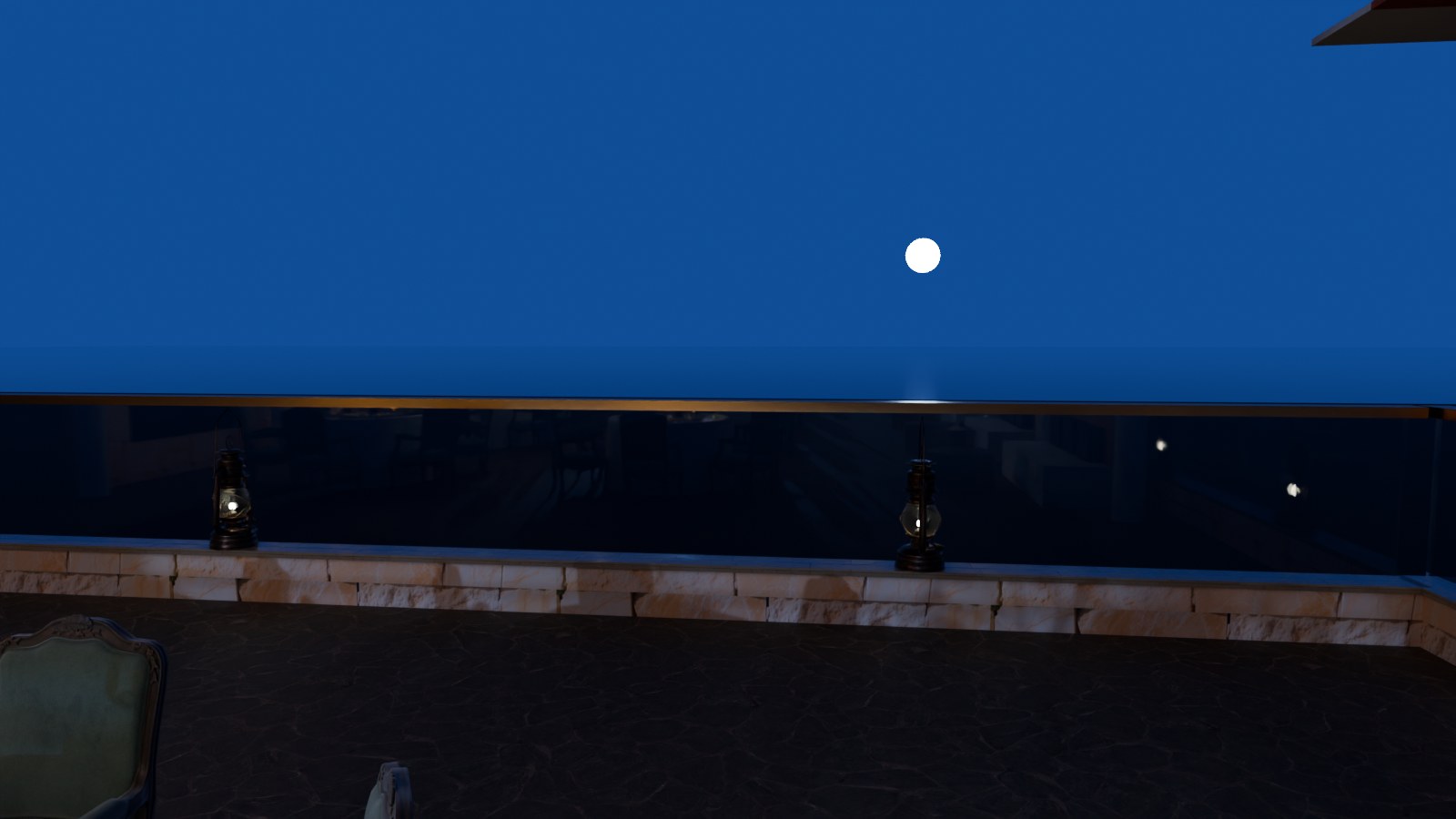
The seafront terrace of 1968 on the bay: 488 m² wrapping the house on three sides over the gardens, the beach and the open sea. Honey-stone pavers, a pergola of white columns with vines, linen-dressed tables, the arguileh lounge, glass-and-iron lanterns along the balustrade, and the moon rising over the water. The evening that never ends, lal sobeh.
The plan
How the house is laid out
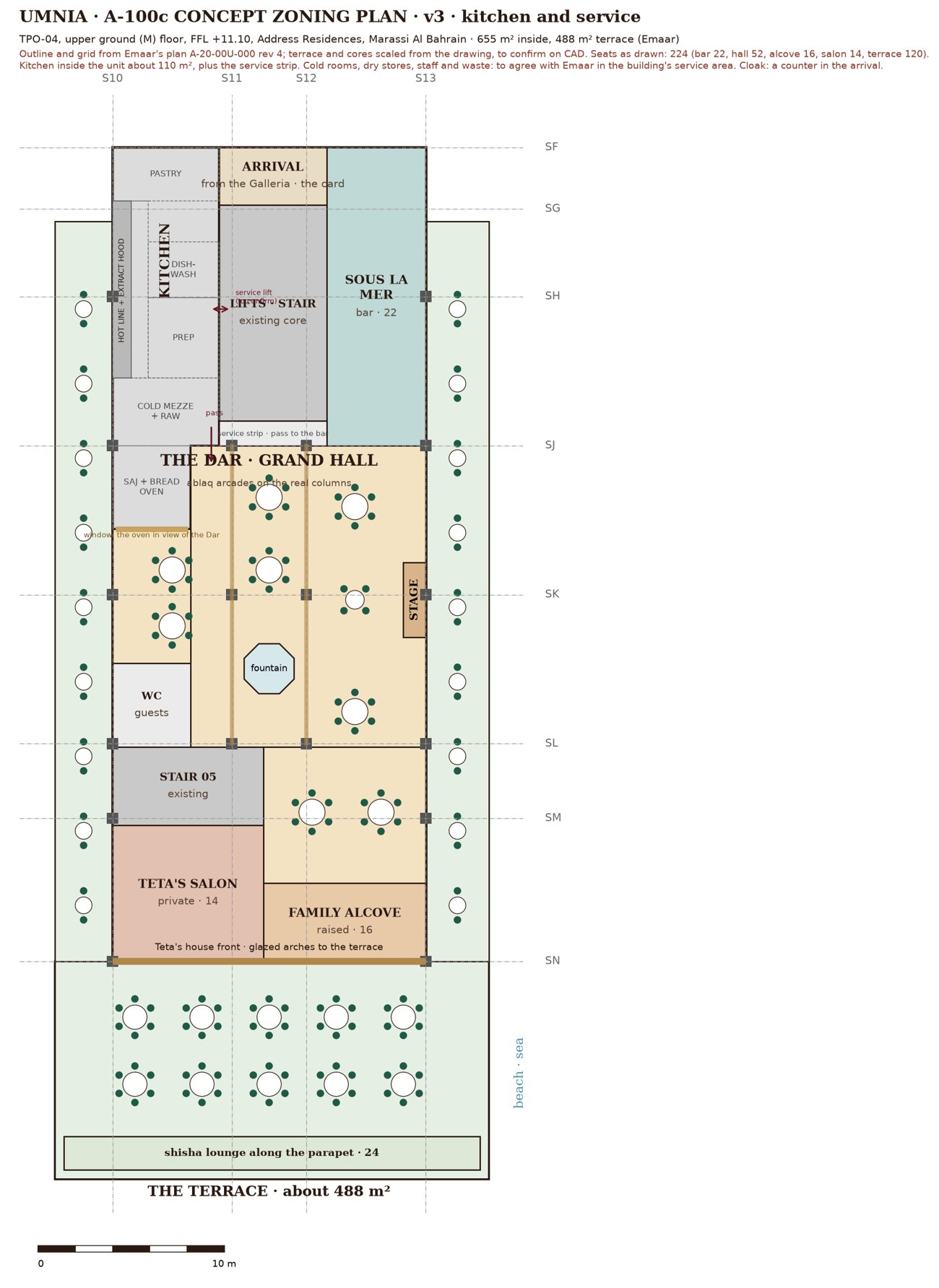
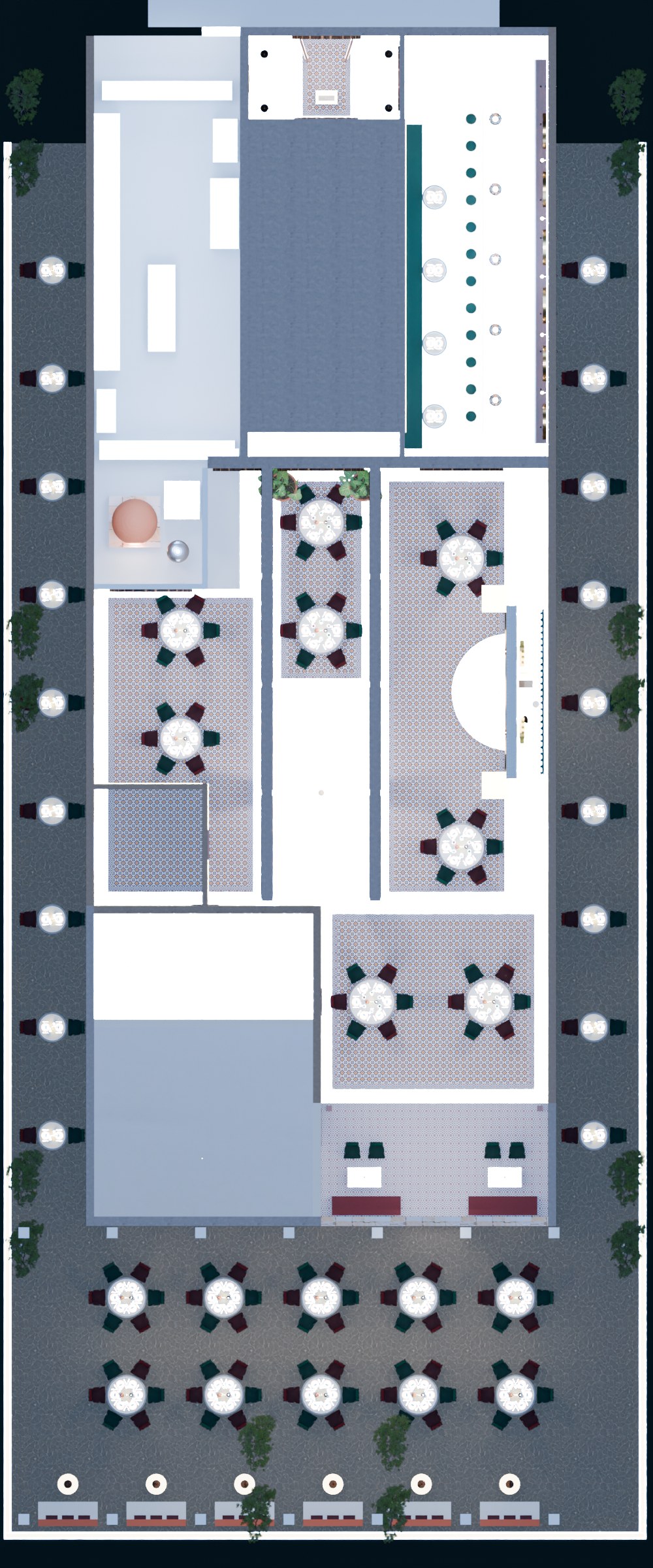
UMNIA takes the upper-ground floor of the Address Residences above Sumosan: 655 m² inside and a 488 m² terrace that wraps three sides, about 1,143 m² in all. Guests arrive from Marassi Galleria at the north end, where Umnia's card waits by the carved doors and the cloak counter sits in the arrival, with the Sous la Mer bar beside it. The building's own columns become the ablaq arcades of the Dar: a nave down the middle with the marble fountain at its heart, the stage on the east side facing it. At the south end, Teta's house front opens through glazed arches onto the great terrace and the sea; beside it the raised family alcove and Teta's salon. About 224 seats as drawn, 120 of them outdoors.
The kitchen and service
The kitchen takes the whole west side, from the Dar to the mall, about 110 m² inside the unit plus a service strip behind the Dar front. It is laid out by stations: the saj and the bread oven at the south end, seen from the Dar through an arched window; cold mezze and the raw dishes (kibbeh nayyeh, frakeh); the hot line under its extract hood along the west wall; prep, dishwash and pastry. Plates go out through the pass into the Dar and along the service strip to the bar. The guest toilets sit beside stair 05, off the west arcade. Cold rooms, dry stores, staff changing and waste are to be agreed with Emaar in the building's service area, reached by the service lift; the extract route and the gas supply are the first questions for Emaar.
A-100c concept zoning plan v3 · the kitchen and service marked, on the real unit and column grid from the building's floor plan; terrace and cores scaled from the drawing, to be confirmed · PDF · DXF for AutoCAD
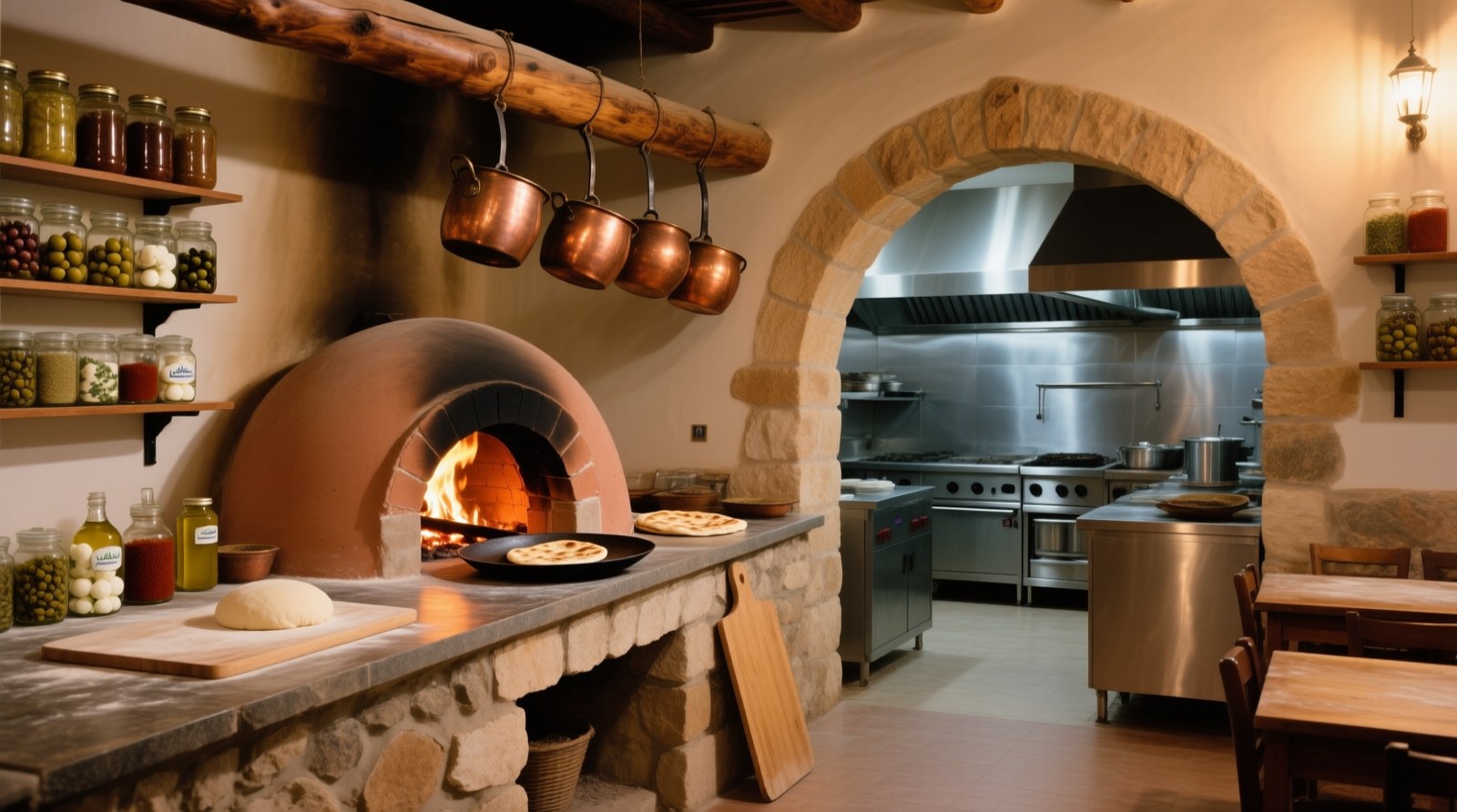
AI mood reference · illustrative · the kitchen
every region
Matbakh el Day'a · Teta's kitchen
The village kitchen that feeds every region: the clay tannour and the saj in view of the Dar, copper pots on a cedar beam, jars of mouneh, the stone counter where the dough is worked; behind them the professional stations, clean steel.
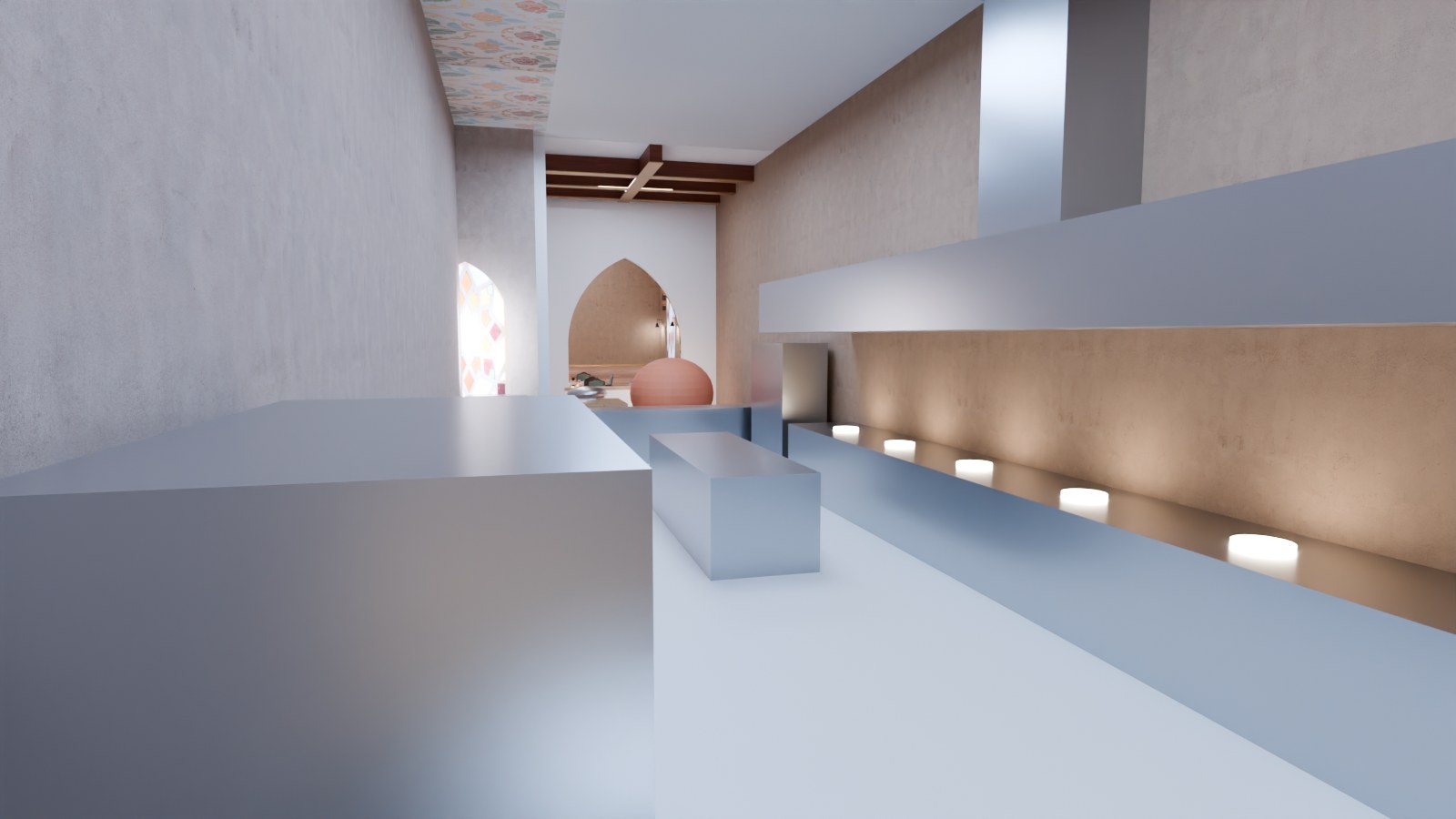
The saj and bread oven, seen from the Dar through the arched windowInside the kitchen: the hot line under the hood, prep and pass (stations as planned; equipment to be detailed with a kitchen consultant)
The house in 3D
Walk through UMNIA
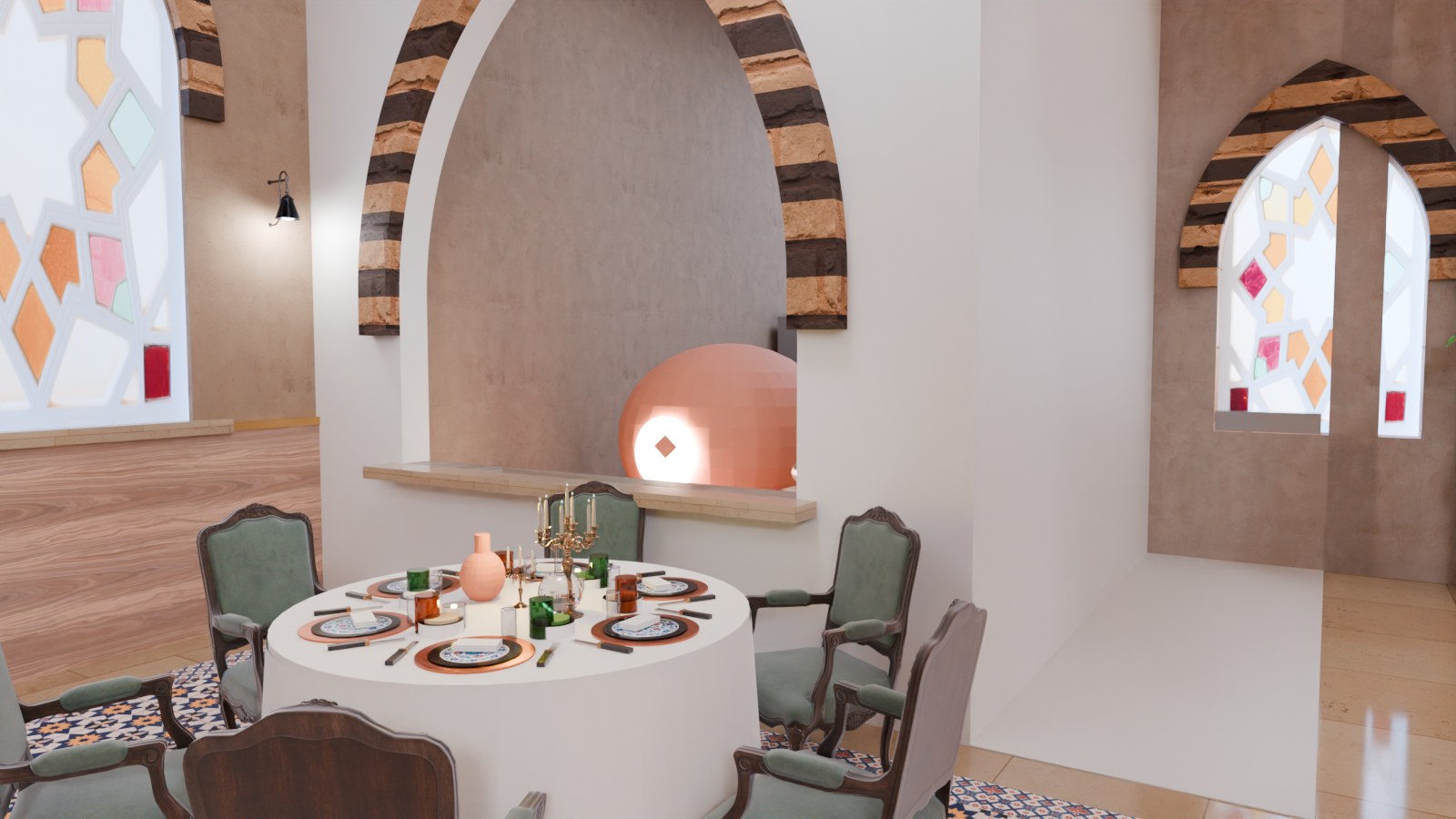
The whole house built in 3D inside its real walls, from Emaar's floor plan: Bab Beiteddine from the Galleria, Sous la Mer, Khan Trablus with its arcades and fountain, Layali Baalbeck, Saida w Sour, Salon Sursock and the Terrasse Saint-Georges on three sides. Every picture here is our own render with real light, not an AI image.
The walk-through film of the 1968 house is being finalised and will appear here.
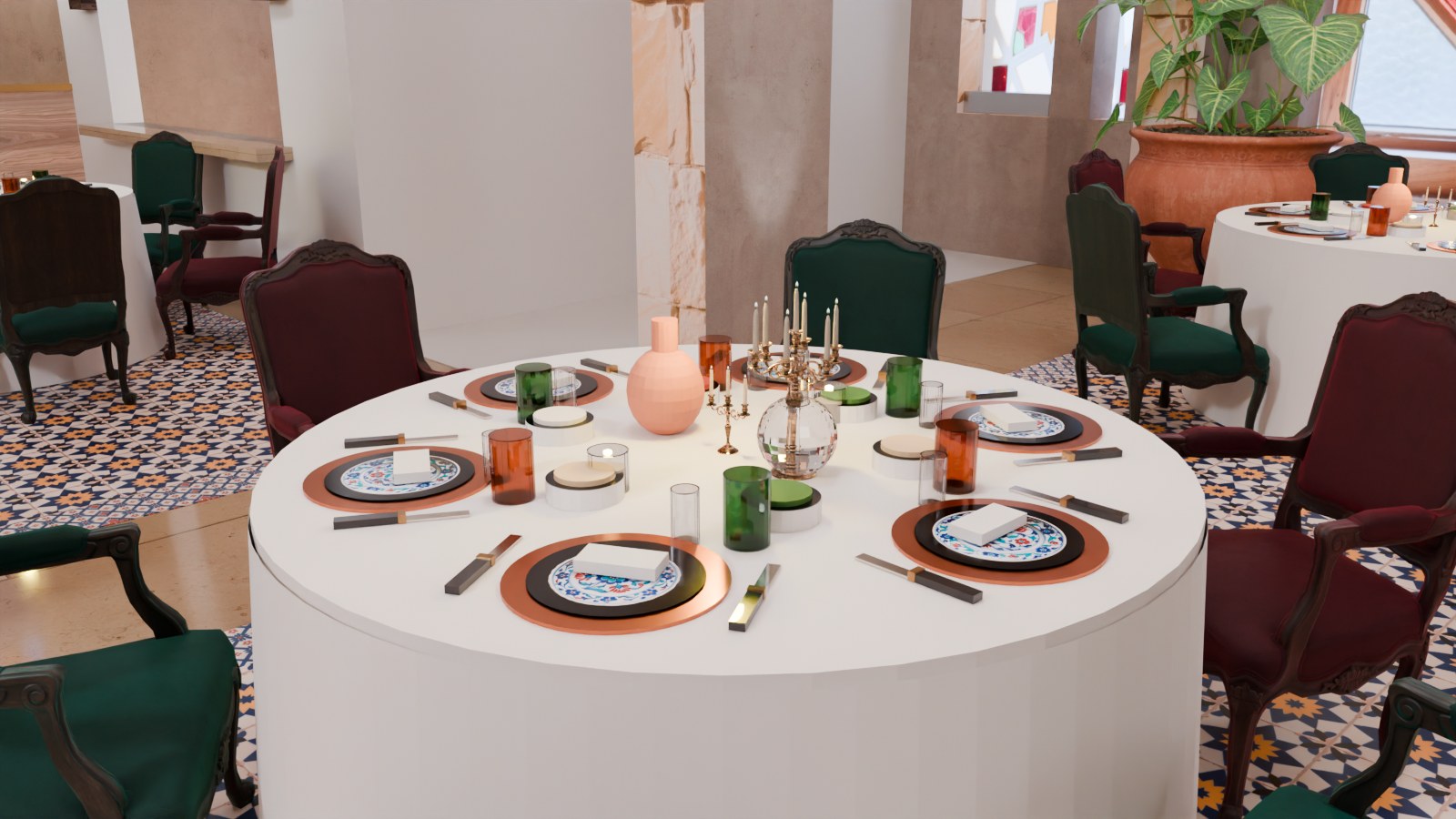
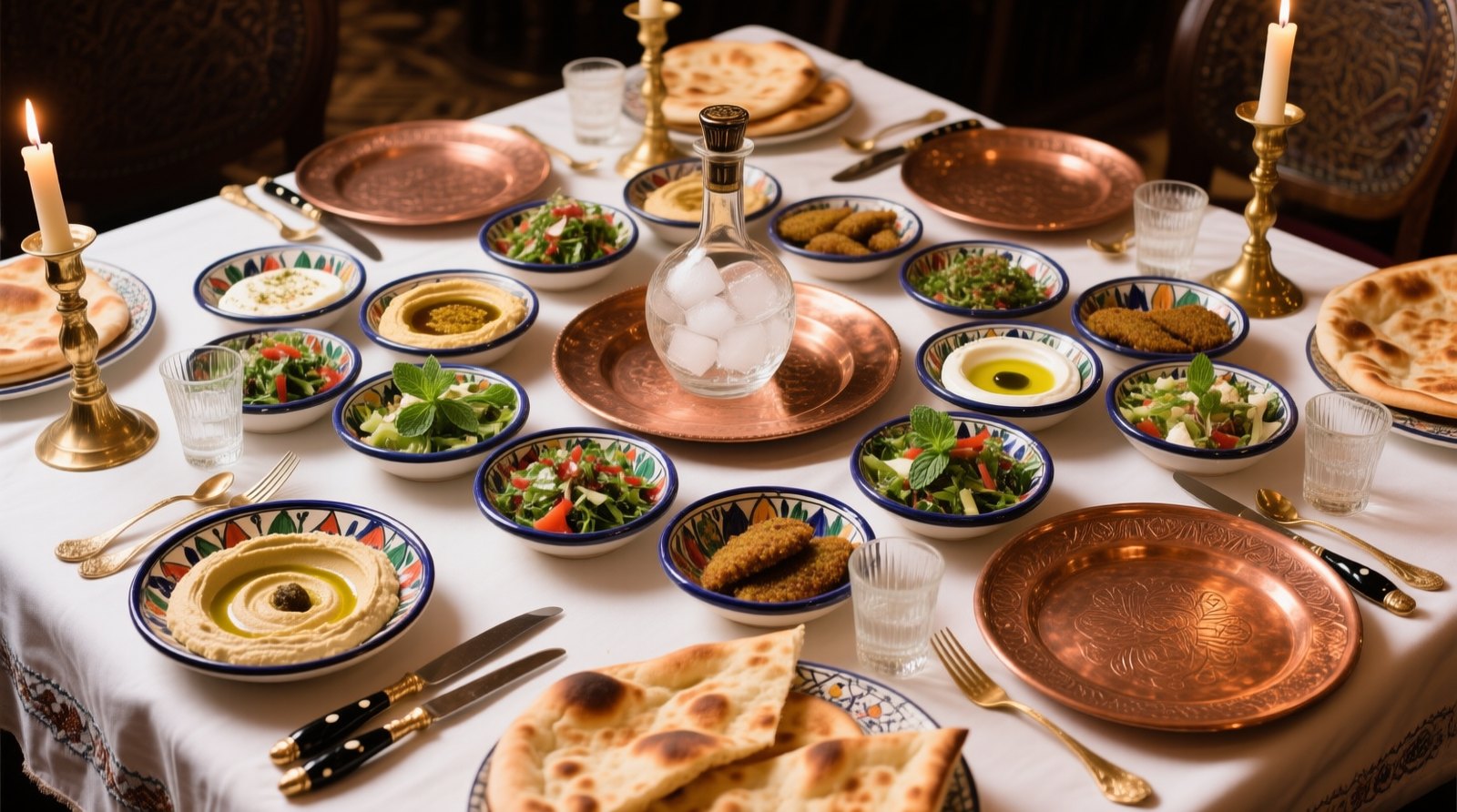
Khan Trablus, the Dar: the fountain under the arcades on the building's columnsLayali Baalbeck: the triple-arched cedar stage, the takht, the columns lit from belowSalon Sursock: Teta's long table under a low chandelier, the triple-arched windowsA table set for six: Tripoli copper, Sarafand glass, the abriq, candlesSous la Mer: the portholes, the square turquoise tiles and the onyx barBab Beiteddine: the cedar doors and Umnia's cardSaida w Sour: the family alcove with its back to the seaTerrasse Saint-Georges, under the pergolaThe sea and the moon from the terraceThe whole house from above, on the real unit
4 · The crafts
Every signature made in Lebanon
Craft
Where it appears
Jezzine cutlery: phoenix handles in horn, brass wings, mother-of-pearl
Every table; the bar foot rail cast after the wings
Blatt Chaya cement tiles, poured in brass moulds since 1881
The hall's carpets, the arrival runner, the café floor
Tarazi inlay and painted wood (Beirut, since 1862)
The cabinet of the recipe book, the bar front
Sarafand hand-blown glass
Water glasses, pendant lamps
Tripoli engraved copper and brass
Chargers, mezze trays, coffee pots
Zouk silk with gold-thread roses
Banquette panels, hosts' garments
Rashaya clay water jugs with painted slip
On every table
5 · The light
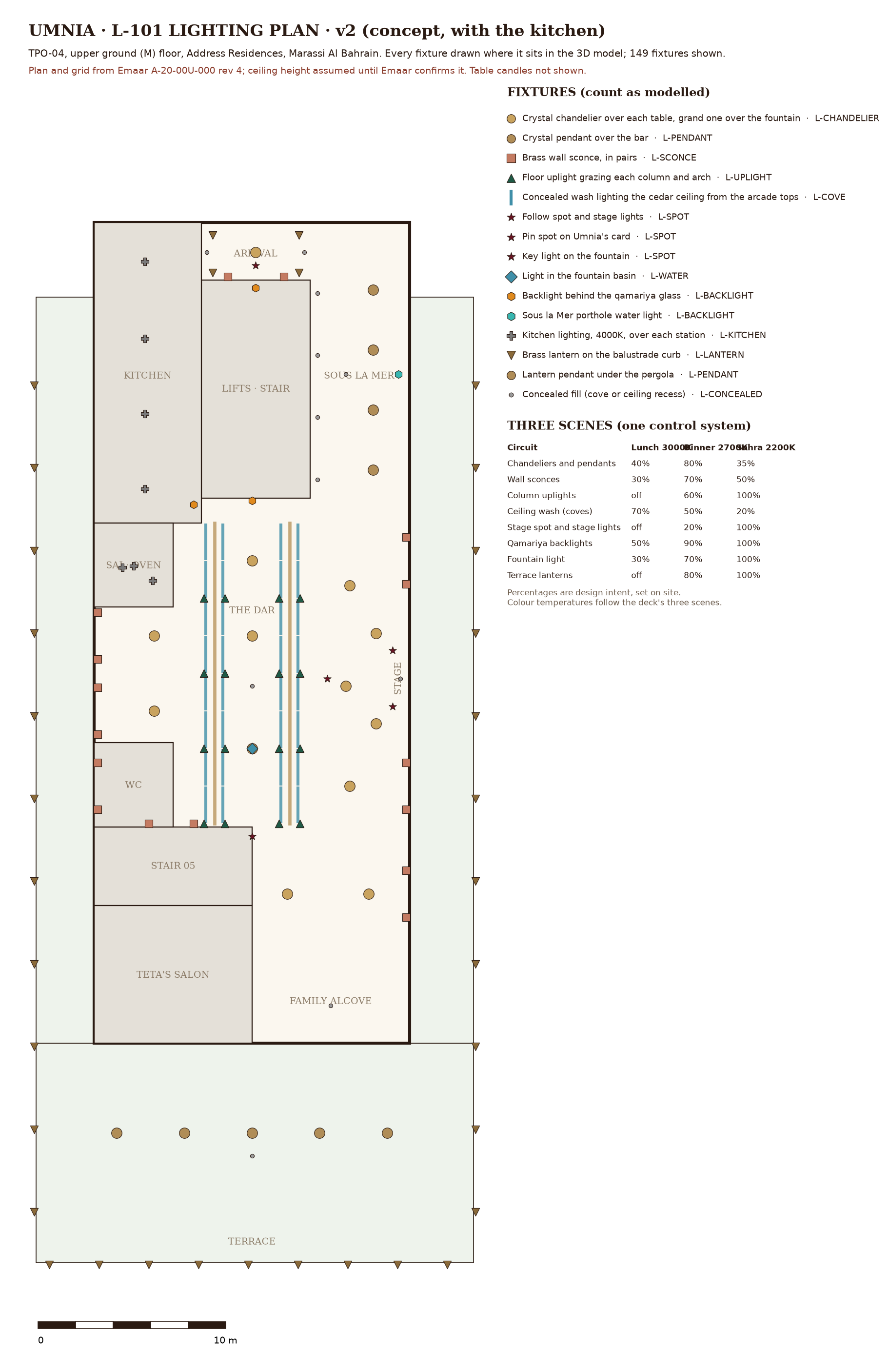
Three scenes, one designed plan
Lunch · about 3,000K
Daylight from the terrace arches and the coloured fans of the triple-arched windows, the fountain sparkling, the arcades bright; the chandeliers low.
Dinner · about 2,700K
A crystal chandelier over every table on the coffer grid and a grand one over the fountain; sconces in pairs at every window; candles and votives on every table.
Sahra · about 2,200K
The room down to amber, uplights grazing every marble column and stone arch, the fountain lit from within, a follow spot on the singer.
Her wish was all of Lebanon around her table, so her recipe book travels the country. Every region brings its own signature dishes, made the way Teta made them at home, better than any chef. The regions are written the Lebanese way. Every dish is tied to its town by a source; no prices at this stage.
Shmal w Trablusشمال وطرابلس
The North and Tripoli: Zgharta, Ehden, El Mina, Batroun, Koura, Akkar · in the house: Khan Trablus, the Dar
Kebbeh nayyeh b'lahm el me'zeكبّة نيّة بلحم الماعزRaw kibbeh of goat meat pounded with fine bulgur, onion and mint. · Zgharta / Ehden
Kebbeh b'shahmehكبّة بشحمةKibbeh shells stuffed with lamb fat, garlic and dried mint, cooked over charcoal. · Zgharta
Kebbeh zghartawiyeh bel saniyehكبّة زغرتاويّة بالصينيّةOven tray kibbeh with a crisp, biscuit-like top and a goat-meat filling, served with hummus or labneh. · Zgharta / Ehden
Samkeh harra trablsiyehسمكة حرّة طرابلسيّةWhole fish baked under tahini, coriander, garlic, chili and lemon. · El Mina, Tripoli
Kebbet samakكبّة سمكFish kibbeh seasoned with white pepper, layered around an onion filling. · Tripoli
Kebbet el hilehكبّة الحيلةThe Lenten "trick" kibbeh, made without meat: a bulgur and pumpkin dough filled with greens, onion, chickpeas and pomegranate. · Batroun
Maacroun bi toumمعكرون بالتومHand-cut dough, boiled and then tossed in garlic, lemon and olive oil. · Batroun
Sweets: halawet el jebn and znoud el sett of Tripoli. Drink: Batroun lemonade, made by Hilmi's since 1888.
Teta's touch: She pounds the goat kibbeh by hand in the stone jorn with a splash of ice water so the meat stays pale and silky. Mint from the garden and a saucer of liyyeh go beside it, and the arak is already poured.
Kesrwan w el Metnكسروان والمتن
Kesrouan and the Metn: Baskinta, Khenchara, Hrajel, Ghazir · in the house: Sous la Mer, the bar
Mankoushet kawarma w jebnehمنقوشة قاورما وجبنةHand-made dough baked with kashkawan cheese, kawarma (lamb confit) and egg. · Baskinta (Metn)
Jebnet me'ze baladiyehجبنة ماعز بلديّةSoft balls of village goat cheese kept in brine. · Hrajel (Kesrouan)
Kebbeh b'kechekكبّة بالكشكKibbeh balls simmered in kishk soup. · Kesrouan
Sweet: maacroun Hobeiche of Ghazir. Bread: mwarraka of Amchit. In the cellar: Château Musar, whose winery is at Ghazir.
Teta's touch: She bakes the qurban herself on Sunday and presses her family's wooden seal into every loaf. The kishk for the kibbeh soup comes from her own mouneh jar, dried on the roof in August.
Beirutبيروت
The city and its coast · in the house: Salon Sursock and the Terrasse Saint-Georges
Kaak Beiruti (kaak el asriyeh)كعك بيروتي (كعك العصرونيّة)The sesame "handbag" street bread, warm, with zaatar or picon cheese. · Beirut
Fattet hummusفتّة حمّصToasted bread, warm chickpeas and garlic laban, finished with pine nuts in ghee. · Beirut
Mjaddara msaffayehمجدّرة مصفّايةThe Beiruti way: lentils and rice puréed and strained until silky, topped with crisp onions. · Beirut
Kebbeh arnabiyehكبّة أرنبيّةKibbeh balls in a tahini sauce sharpened with bousfeir (Seville orange) and other citrus, with chickpeas and fried onion. · Beirut
Soujouk w bastermaسجق وبسطرماArmenian spiced sausage and cured beef, from Beirut's Armenian quarter. · Bourj Hammoud
Sweet: moufattaka, the golden pudding of Basta for Job's Wednesday. Drink: jallab with pine nuts.
Teta's touch: She squeezes the bousfeir the morning she makes the arnabiyeh. Moufattaka she stirs for hours and serves only on the last Wednesday of April, "because patience is Job's".
Jabalالجبل
The Mountain: the Chouf and Aley · in the house: Bab Beiteddine, the arrival
Kebbeh labniyeh bel awarmaكبّة لبنيّة بالقاورماKibbeh balls in a warm yogurt stew (goat's milk in the high villages) with awarma (lamb confit). · Chouf
MansoufehمنسوفةFlattened balls of bulgur and pumpkin in tomato sauce, with sumac onions and verjuice. · Chouf villages
OmayshehعميشةKishk and fine bulgur bound with lukewarm water and olive oil, eaten with grilled onions. · Chouf
Manaqish el Choufمناقيش الشوفVillage manaqish topped with zaatar and sesame, or with kishk and red pepper. · Chouf (Baater)
HrissehهريسةWheat and meat cooked through the night until they melt together. · Bhamdoun (Aley)
Sweet: kaak el Eid of the Chouf. In the cellar: Château Belle-Vue of Bhamdoun.
Teta's touch: Her hrisseh is stirred all night with a long wooden paddle, in turns with the neighbours, "so the whole village has a hand in it". The awarma for the labniyeh is from the jar she sealed in autumn.
Jnoubالجنوب
The South: Saida, Sour, Nabatieh, Jezzine, Srifa · in the house: Saida w Sour, the family alcove
FrakehفراكةRaw meat pounded on a marble slab (blata) with kammouneh spice and dried rose petals (jurri), rolled into balls. · Nabatieh
Kebbeh nayyeh bel kammounehكبّة نيّة بالكمّونةNabatieh's raw kibbeh built on kammouneh, the southern herb-and-cumin blend. · Nabatieh
Mjaddara hamraمجدّرة حمرا"Red" mujaddara of red lentils, coarse bulgur and deeply cooked onions. · Srifa
Foul, hummus w msabbahaفول، حمّص ومسبّحةTyre's breakfast: fava beans cooked about 15 hours, hummus, and msabbaha (whole chickpeas in tahini). · Sour (Tyre)
SayyadiyehصيّاديّةFisherman's rice, browned with onions and cooked with fish, served with tahini sauce and toasted nuts. · Saida
Kebbeh Saidawiyeh bel joz w el shattaكبّة صيداويّة بالجوز والشطّةKibbeh balls stuffed with butter, walnuts and hot red pepper paste. · Saida
Labnet me'zeلبنة ماعزFirm goat labneh aged for six months in olive oil. · Jezzine
Sweets: senioura and knefeh of Saida. Drink: sahlab. Bread: Jezzine's wood-fired bread.
Teta's touch: She pounds the frakeh on her own marble blata and blends her kammouneh with rose petals she dried herself. The onions for the mjaddara hamra she cooks slowly until the whole pot turns red.
Zahle w el Bekaaزحلة والبقاع
Zahle, Baalbek, Hermel and the West Bekaa · in the house: Layali Baalbeck, the stage
Sfiha Baalbakiyehصفيحة بعلبكيّةSmall square open pastries of spiced lamb, folded at the corners. · Baalbek
Kafta nayyehكفتة نيّةRaw kafta with chili pepper. · Baalbek
Kechek akhdar bel jozكشك أخضر بالجوزFresh "green" kishk spread on a plate, topped with walnuts, onion, mint and tomato. · Kherbet Qanafar (West Bekaa)
Salatet kechekسلطة كشكGoat-milk kishk worked with cold water into a soft dough, mixed with tomato, cucumber, radish, onion, mint, garlic and olive oil. · Aarsal (Baalbek-Hermel)
Samak el troute (troute el 'Assi)سمك الترويت (ترويت العاصي)Trout fresh from the Assi (Orontes) river. · Hermel
Kechek 'al lahmeh w dfinكشك عاللحمة ودفينMeat cooked in kishk, alongside dfin (bulgur with chickpeas). · Hermel
MakdousمكدوسBaby aubergines stuffed with walnuts, garlic and chili, cured in oil. · Hermel
Breads: kaak b'halib of Zahle and markouk of the Berdawni. Drink: arak Zahlawi, from the capital of arak.
Teta's touch: In August she dries the kishk on the roof and rubs it to powder by hand, the way the women of the village do it together. Every sfiha she pinches closed herself, and they go out still hot with a squeeze of lemon.
AI mood reference · illustrative · the table
Five acts at Teta's table
I · Ahla w sahla أهلا وسهلا
Kaak Beiruti, Khenchara's qerban, Baskinta kawarma mankoushe, markouk from the saj, makdous, Koura olive oil with Jezzine goat labneh.
Kebbeh b'shahmeh, samkeh harra of El Mina, sfiha Baalbakiyeh, Tyre's foul and msabbaha, Saida's walnut kibbeh, Batroun's maacroun bi toum, soujouk from Bourj Hammoud.
IV · El walimeh الوليمة
One dish carried to the whole table on engraved Tripoli copper: Bhamdoun's hrisseh, cooked through the night, the village dish everyone has a hand in.
V · La tol'et el daw لطلعة الضوّ
Znoud el sett, halawet el jebn, senioura, knefeh, moufattaka, maacroun Hobeiche; Lebanese coffee poured from the rakweh, jallab, sahlab, and the song.
The cellar, all Lebanese
Arak: Ksarak, Arak Brun of Domaine des Tourelles, Arak Wardy, Arak Touma, Kefraya, Massaya, L'Arack de Musar; Zahle, the capital of arak, poured at the table. Wines: Château Musar, Ksara, Kefraya, Tourelles, Ixsir, Batroun Mountains, Belle-Vue, Domaine de Baal, Marsyas, Massaya. For every guest who doesn't drink: Batroun lemonade, jallab, sahlab in winter, rose and mulberry syrups.
7 · Umnia Café · Hamra
Her morning
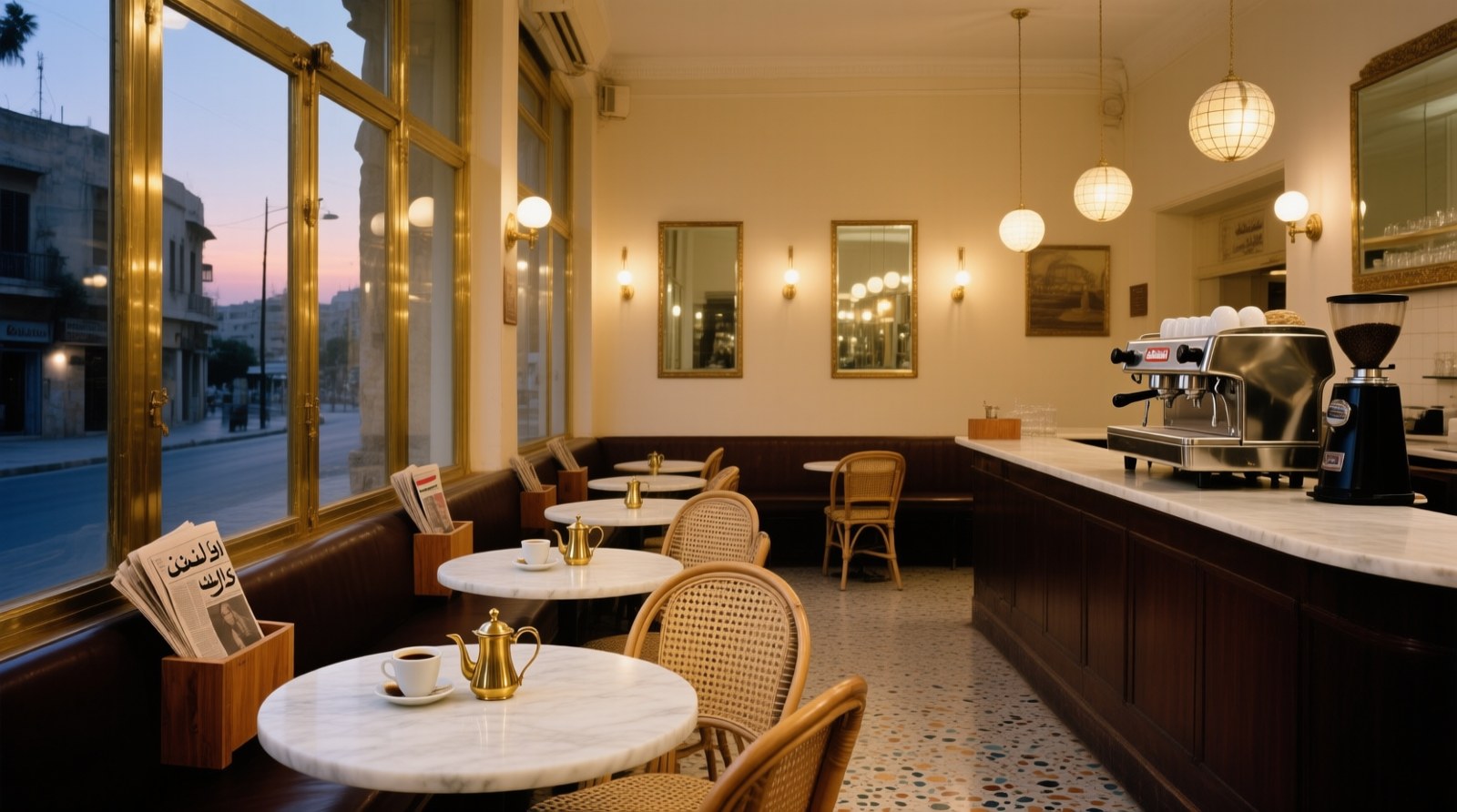
AI mood reference · illustrative · the café
The unlicensed café Emaar asks for, in front of the mall: Umnia's mornings in the spirit of the Hamra cafés of the 1960s, where tables spilled onto the street and became newsrooms. Marble bistro tables, cement tiles, tall arched windows, brass coffee pots; manakish from the saj, ka'ak, knefeh, Lebanese coffee, jallab. The same story by day, so the café sells the house and the house fills the café.
8 · Why UMNIA, here
The Lebanese house of Marassi
A destination
A licensed, festive Lebanese house with a terrace on the sea, between Marassi Galleria and two Emaar resorts: a night out worth crossing the causeway for.
The guests
Saudi visitors are about two-thirds of Bahrain's arrivals, with residents and resort guests every night of the week: a table built for families and friends.
Day and night
One character across two places: Umnia's house at night, Umnia Café in the morning. Each sells the other.
9 · Where it lives
Recommended: the Address, above Sumosan
Address Residences, upper ground floor above Sumosan: a shell-and-core space of 655 m² inside with a 488 m² terrace wrapping three sides, 1,143 m² in all. Reached directly from Marassi Galleria, from the hotel lobby and from the promenade, and visible from the promenade. Recommended: an empty shell to build the whole house freely, a long hall whose columns become the palace arcades, and a terrace larger than most restaurants, looking over the gardens and the beach to the sea.
Vida Hotel, the sales office: 756 m² inside and 293 m² outside; the existing air handling cannot serve a kitchen, so a new extract would be needed.
Vida Hotel, the existing restaurant: available only if its operator leaves.